Monday, May 15, 2006

AOMORI PREFECTURE TO WAKAYAMA PREFECTURE


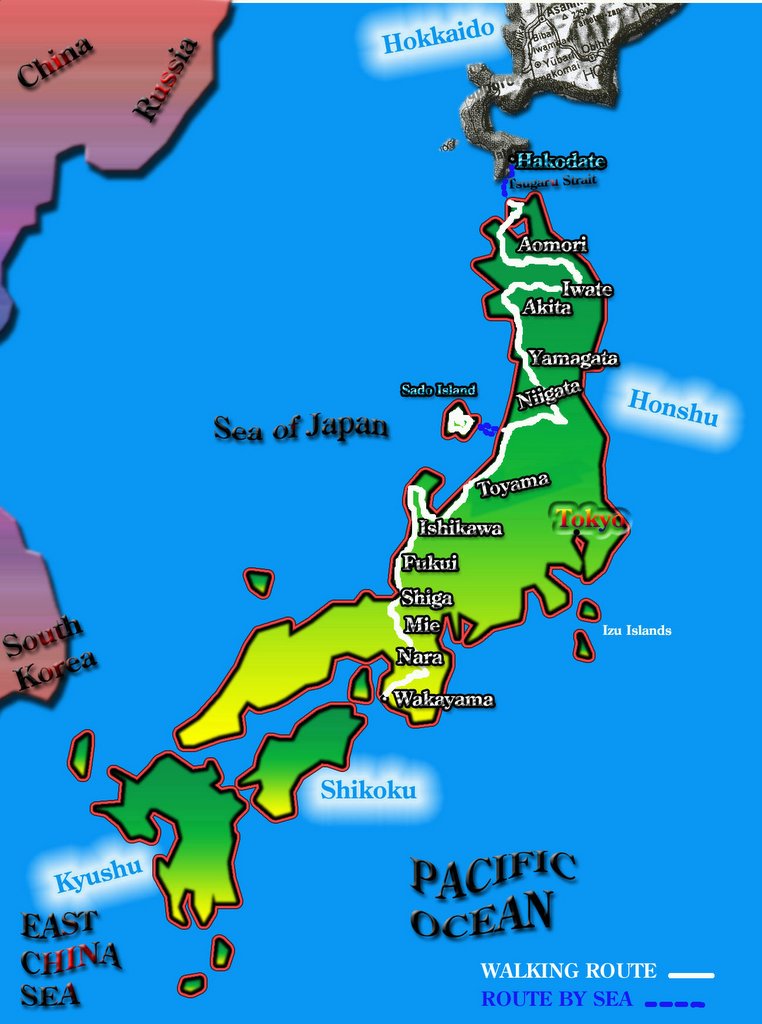
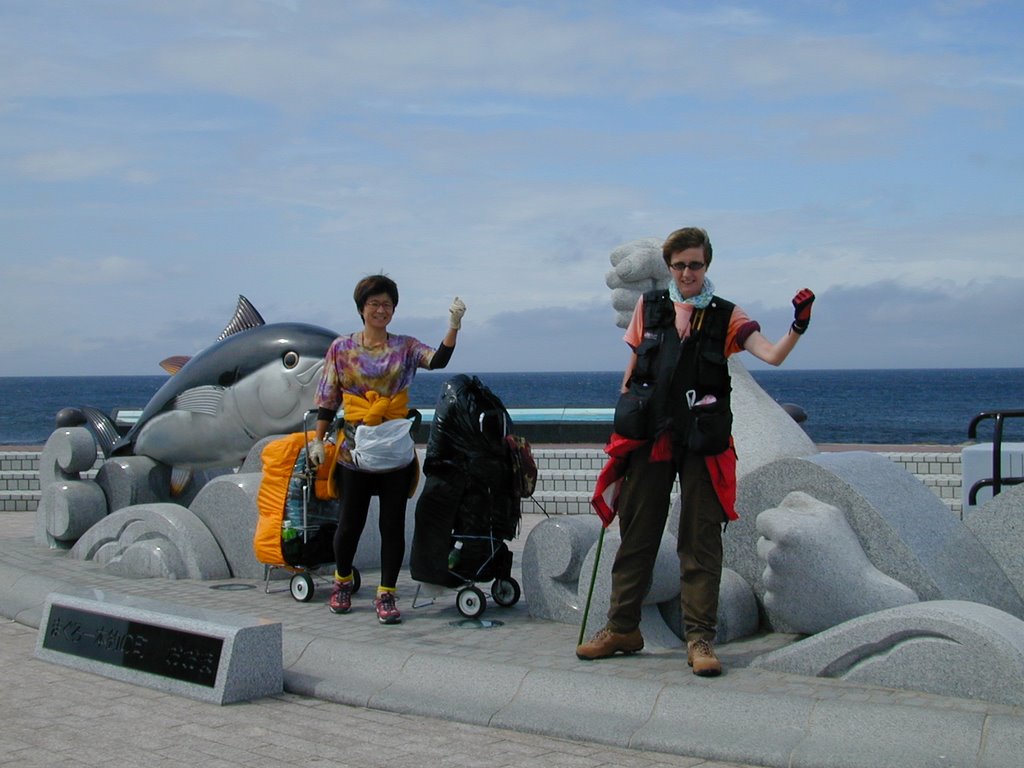
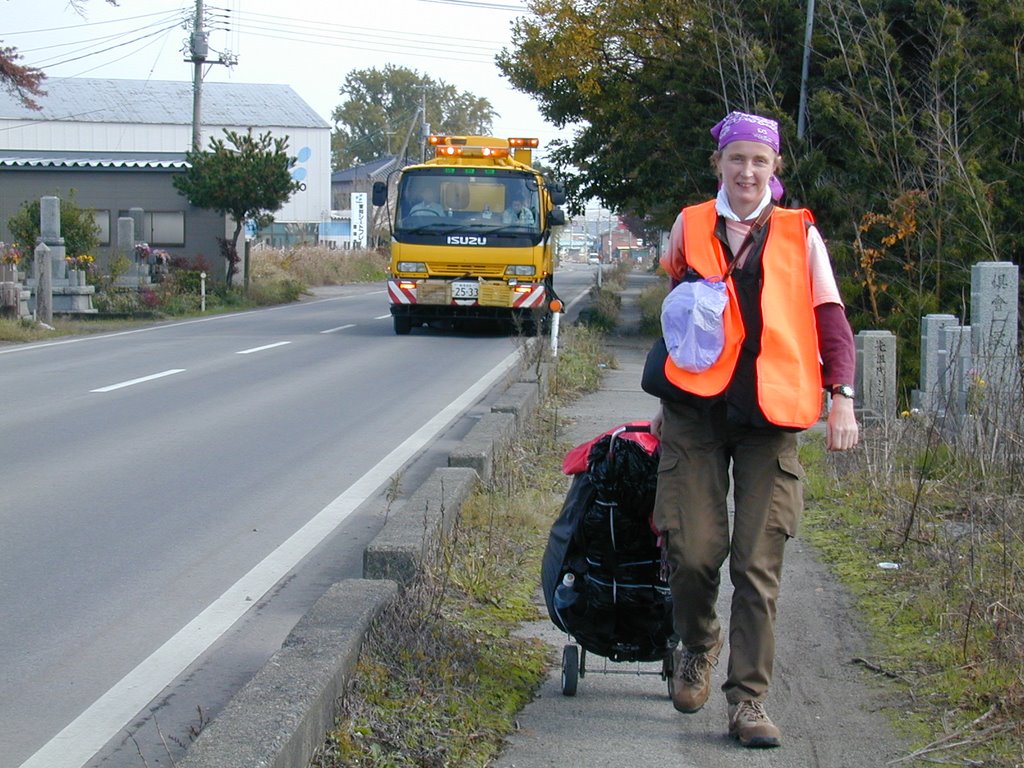
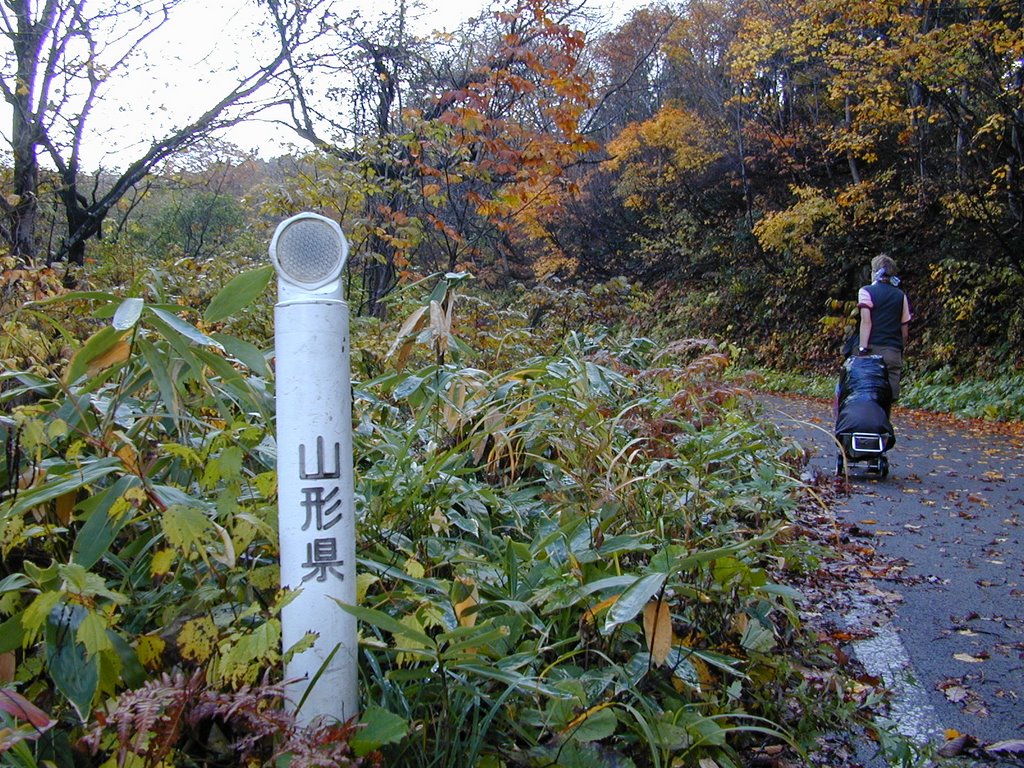
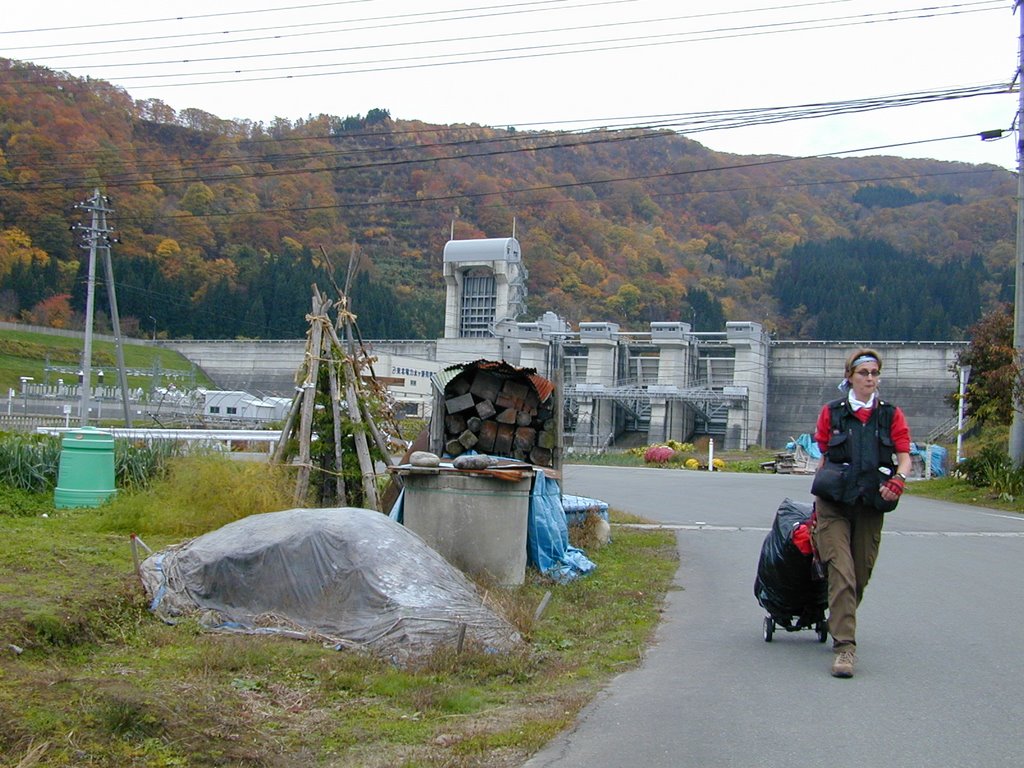
The second leg of our walk took us from Cape Oma, the northernmost point on Honshu Island, in Aomori Prefecture down through to Wakayama Prefecture.


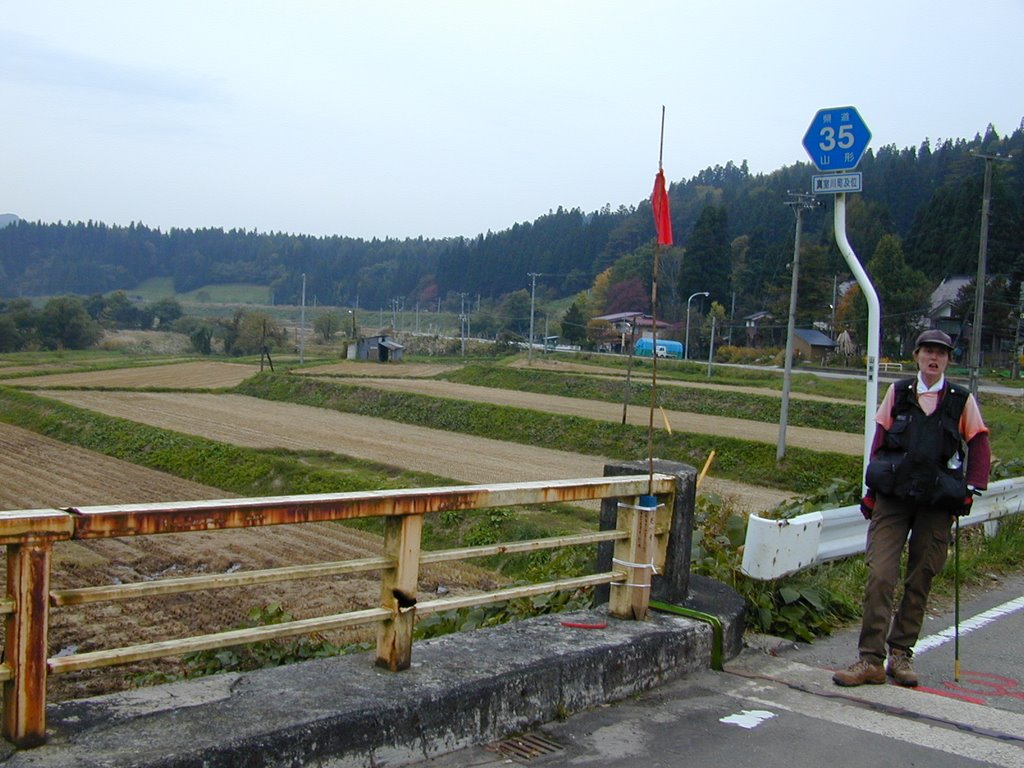
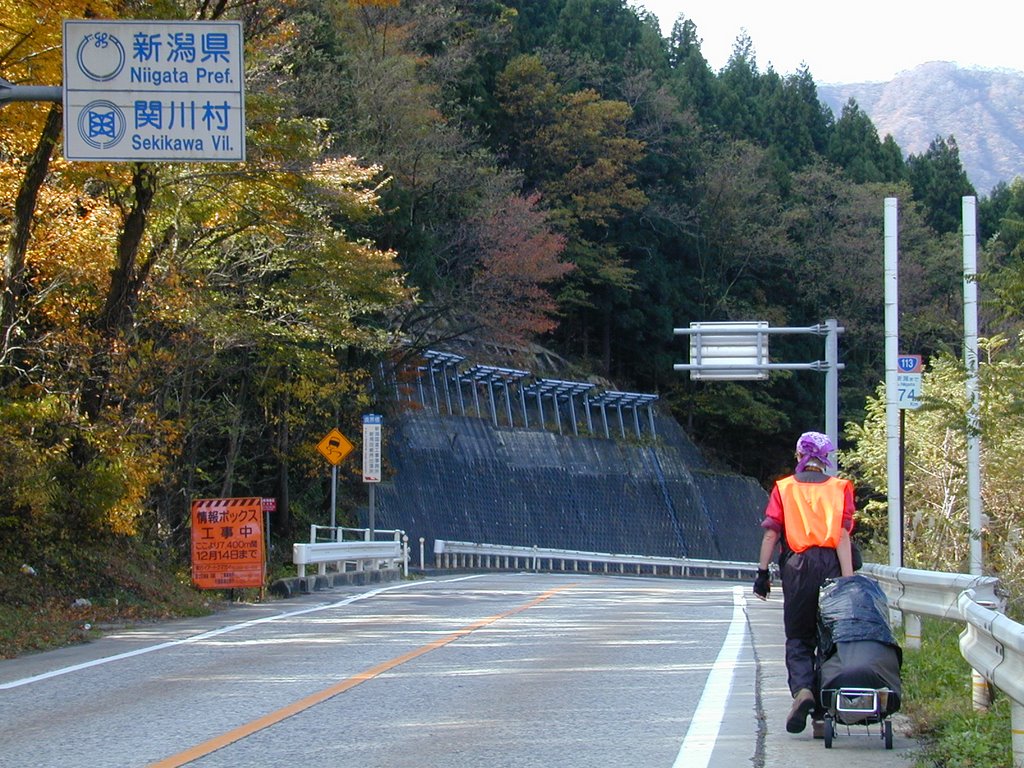
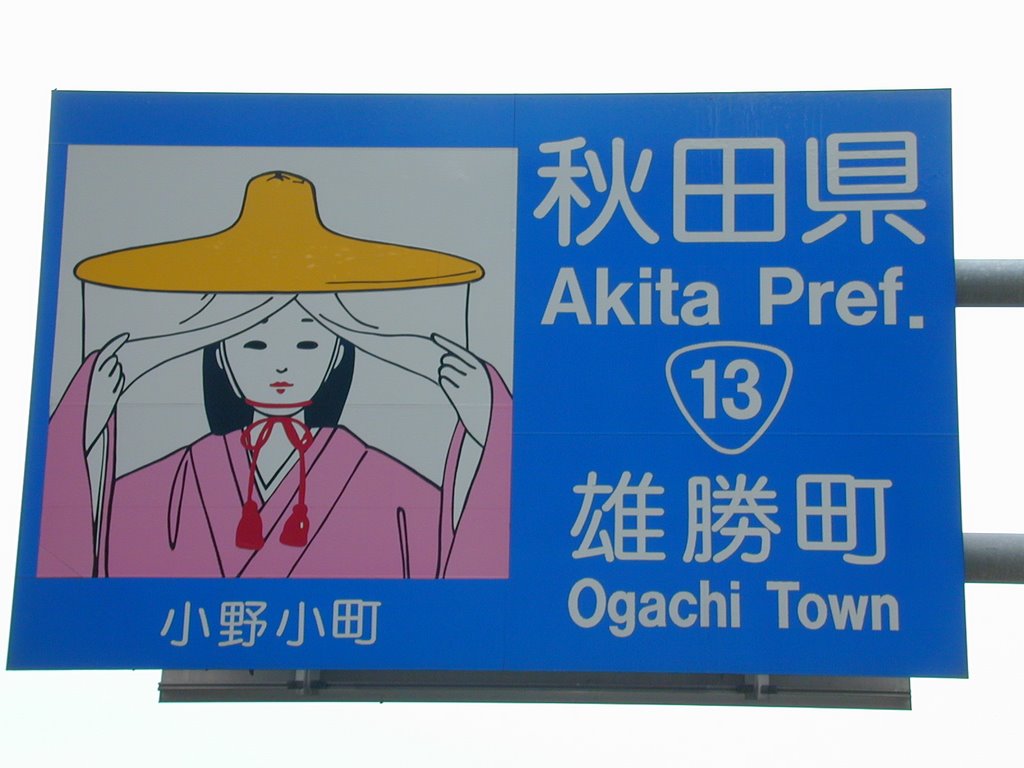
Our route covered Aomori Prefecture, Iwate Prefecture, Akita Prefecture, Yamagata Prefecture, Niigata Prefecture, Toyama Prefecture, Ishikawa Prefecture, Fukui Prefecture, Shiga Prefecture, Mie Prefecture, Nara Prefecture, and Wakayama Prefecture.

From Wakayama City, we crossed over to the island of Shikoku.


GOOGLE MAP OF JAPAN

ROUTE IN JAPANESE 日本の地図

Posted by Picasa

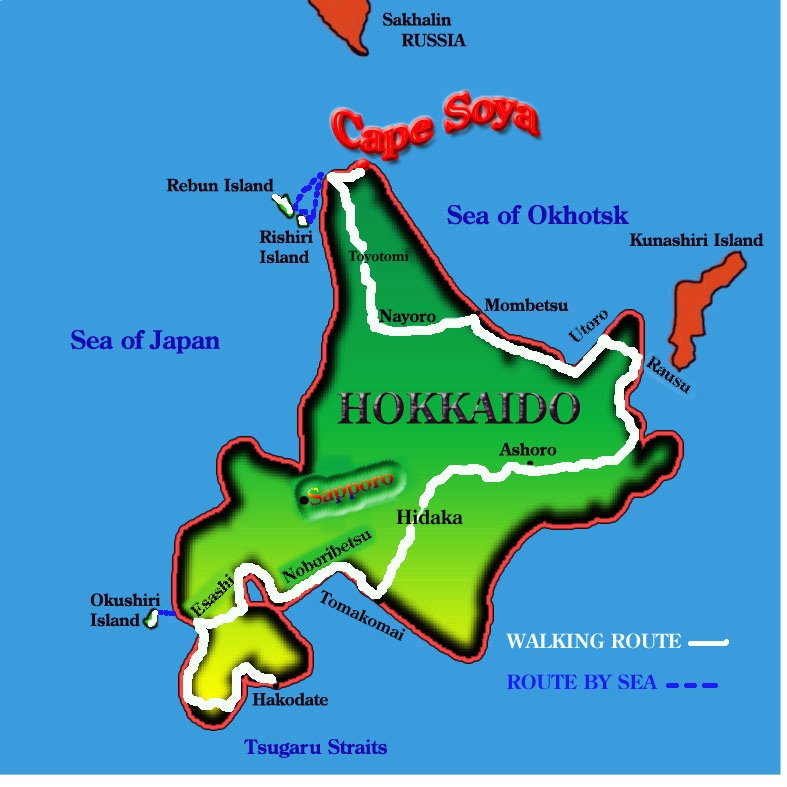
MAP SHOWING OUR ROUTE: HOKKAIDO


ALL MAPS DESIGNED BY MARY KING 2006


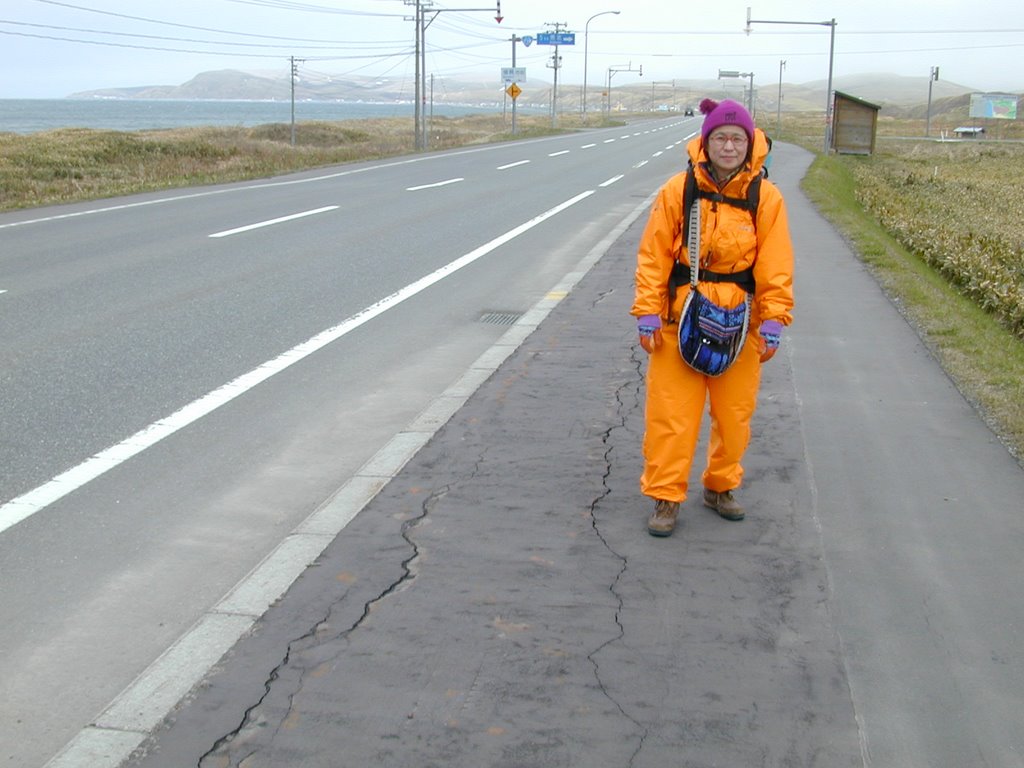
The first leg of our walk was through the island of Hokkaido, from Japan's northernmost point, Cape Soya. We spent about four months traipsing around Hokkaido, finishing at Hakodate, from where we sailed across the Tsugaru Straits to northern Honshu (Cape Oma, in Aomori Prefecture).


Posted by Picasa

Sunday, May 14, 2006

AUTHOR BIOS


I WAS born in London in 1961 and trained as a reporter and press photographer in Britain. After working as a journalist in Britain for several years, I got bitten by the travel bug and headed off to the Middle East. There, I continued my work as a photojournalist in Jerusalem and Cairo. In 1986, at the height of reports of famine in sub-Saharan Africa, I worked as a volunteer in the feeding/hygiene centre on the Wad Sharife Refugee Camp, in Sudan. Since coming to Japan in 1988, I have worked on the editorial staff of The Japan Times, The Daily Yomiuri and Asahi Evening News. I was the Travel Page Editor at the Asahi Evening News for several years. I continue to specialise as a travel writer and photographer, and I am trying to get cracking on a second book, tentatively called “Japan on Bum: Sitting to Mu,” which is about my experiences of Zen training at a temple in Japan.


ETSUKO SHIMABUKURO was born in Okinawa in 1964 and studied archaeology at university in Tokyo. Later, she won a scholarship to study computer science at university in the United States. In 1991, Etsuko returned to Japan to take up the reins of her career at European and U.S. investment banks. Currently, she is working as a senior consultant for an IT venture company in Tokyo. During the Japan on Foot project, Etsuko planned the walking route and took most of the digital photographs. She also maintained the original Japan on Foot website in both English and Japanese and, with Mary, organised charity events for HELP. In April, 2006, Etsuko Shimabukuro was one of 18 Japanese to take part in a one-week marathon through the Sahara Desert.


READ THE BLOG OF THE WALK FROM HOKKAIDO

Part 5: KYUSHU


*Please note that the Japan on Foot book and the Japan on Foot blog are *not* the same. The book is far better.


A Man Called Adams


ALL PHOTOS B
Y JAPAN ON FOOT 2001/2002


WILLIAM ADAMS is reported to be the first Englishman to have set foot on Japanese soil. The pilot of the Dutch ship the Liefde sailed into the eye of a storm and, his vessel disabled, put ashore at Bungo (present-day Usaki city, in Oita prefecture) on April 19th, 1600. Shortly afterwards, Adams and his sick crew were incarcerated at Osaka Castle on the orders of the powerful warlord and soon-to-be shogun Tokugawa Ieyasu. Portuguese priests had spread wild allegations that Adams was the captain of a pirates’ vessel. Adams may not have got off to a good start in Japan, but his situation improved after lengthy questioning from his captor. Ieyasu had tired of the petty intrigues of the Jesuit missionaries, but he was impressed by the frankness and worldly knowledge of the Englishman. Much to the chagrin of the Portuguese and Spanish, Ieyasu appointed Adams to be his diplomatic and trade adviser. In 1604, the shogun ordered Adams to build a western-style sailing ship at Ito, on the east coast of Izu peninsula. Satisfied with the eighty-ton vessel, the shogun then ordered an even larger ship, of 120 tons, to be constructed. Adams was graciously rewarded for his efforts, receiving first a large house in Edo (now Tokyo), and then two swords that would transform the simple Will Adams into Miura Anjin, a samurai. Adams was warned that he would never be able to return to his homeland. Ieyasu told him that Will Adams was dead; that only Miura Anjin lived, and therefore the marriage between Adams and his wife in Kent was annulled. Now, with his own fief at Hemi, within the boundaries of present-day Yokosuka City, and a handsome stipend, Anjin was in the position to marry Oyuki, the daughter of a noble samurai. His Japanese wife bore him a son, Joseph, and a daughter, Susanna, but Anjin found business taking him further and further away from home as he regularly sailed off on trade missions to Okinawa and China. Anjin also became preoccupied with helping the Dutch and the British set up trading posts at Hirado, an island off the shores of Nagasaki. The Englishman died on Hirado in May, 1620. He was fifty-seven. Hirado specialities such as gobomochi and kasudosu cakes, as well as elegantly wrapped rice crackers are the delights being traded these days at Cake Shop William, a popular souvenir store on the English Trading Residents Street on Hirado. Etsuko and I peered through the shop’s window at the delicacies, wondering what Adams would make of all this, particularly the fact that the cake shop in his name stands on the site of the house where he drew his last breath. A short stroll from Cake Shop William brought us to what the tourist literature says is Adams’s tomb, but it was only after comparing the English and Japanese blurbs on the nearby placards that it became clear that the actual whereabouts of the English samurai’s grave is unknown. In true Japanese spirit the tomb we were looking at was nothing more than a testament to the ethos that you should never let the facts ruin Japanese history, and certainly not when it’s an excuse to construct another tourist attraction. I wondered how much more of the life of the romantic, English samurai might be pure fabrication. A plaque by Adams’ pseudo-tomb explains that to commemorate his four hundredth birthday, a stone had been brought from the grave of Mary Hyn Adams, his English wife in Kent. The stone had been placed on his tomb so that "finally, their two spirits could be reunited."


Grave Concerns


ALL PHOTOS BY JAPAN ON FOOT 2001/2002


A BENT-OVER old woman was tending to graves at Neshiko cemetery, arranging colourful flowers in a vase and pouring out small cups of tea to appease the souls of her ancestors. "I come here every day," she told Etsuko.
"There are nine graves to look after; it’s a lot of work but I’m hoping soon to have all my ancestors put together in one tomb, in true Buddhist tradition," she laughed. Etsuko and I had been struck by this cemetery on Hirado Island, as it differed from any other cemeteries we’ve seen in Japan. There were very few large tombs; mainly humble-looking graves covered with slate-like slabs that were gaily decorated with an abundance of flowers. It reminded us of cemeteries we had seen during travels through Chile, Bolivia and Peru, except that here not one single cross was in sight. We had decided to take a stroll around Neshiko after spending the morning at Hirado City Christian Museum. There, we had viewed various religious icons of the island’s Kakure Kirishitan (Hidden Christian) community and it had been explained to us that while the statues on display might look like Kannon Buddhas, they were, in fact, representations of Saint Mary. A basket of fish, we were told, symbolized Christ as a fisherman of men’s souls, and crosses hidden on the ornaments were obvious signs of the ornaments having been Hidden Christian icons. Crucifixes on chains, rosaries, bronze figurines and minute pieces of fabric tucked away in small metal cases, as well as porcelain bowls used for Kirishitan rituals were among items we viewed at the museum. Many of the artifacts had been hidden away for generations; the Christian community ever fearful of persecutions and long traumatized by the island’s history of martyrs who had been crucified on the shores of Neshiko, leaving behind a sea of blood. The middle-aged woman working at the Kirishitan museum denied that any Hidden Christians now lived on Hirado. "I believe only Ikitsuki Island has any Hidden Christians these days. Certainly, people in Neshiko won’t talk about it, they’re a tightlipped bunch here. Not even Shusaku Endo could find out anything when researching Hidden Christian history for his book Chinmoku (Silence)," she earnestly told us. But the previous day, while at Hirado Tourist Museum, we had heard that pockets of Hidden Christians still do exist on Hirado, and mainly out near Neshiko. The curator had blushed when I had inquired how many Hidden Christians might still exist on the island. “I think only the town hall could tell you that, but it might be a problem revealing such figures. We have a dowa problem here,” she added, referring to the buraku, a segment of Japanese society who have long suffered prejudice and continue to fight for equal rights to this very day. But, as regards the Hidden Christians, it had been to the chagrin of the Roman Catholic Church that many had refused to return to the fold of the mainstream church, even well after the Christian prohibition laws were abolished in the mid-nineteenth century. Many Hidden Christians were unwilling to give up a tradition of ancestor worship, they also feared possible future persecution from the Japanese government, and some of the community simply had reservations about a Westernized Christianity that appeared loud and flashy to them. Those who did not return to the fold of the Roman Catholic Church became known as Hanare Kirishitan (Separated Christians), a "lost flock" that embraced clandestine rituals, a bizarre iconography and beliefs that blended Catholicism, Buddhist cosmology and Japanese fables. In their holy book, "Tenchi Hajimari no Koto" (The Beginning of Heaven and Earth), the Virgin Mary is portrayed as a shamaness closely associated with the sun. And, during Otaiya, the Hidden Christian Christmas that starts on Dec. 23, this "lost flock" recalls a unique nativity story, one in which Maruya (Mary) is thrown out of her parents’ home after becoming pregnant to give birth in a country called Beren. Commonly known as the "Tenchi," the bible of the Hidden Christians says that three kings from Turkey, Mexico and France visited Mary in the stable at the time of Christ’s birth. However, with the younger generation moving out to the big cities, the influence of television as well as all the other trappings of modern society, the traditions of Japan’s Hidden Christians are dying.


***

The little old lady at the Neshiko cemetery invited Etsuko and me back to her home for tea and a chat. A small kamidana (Shinto shrine) adorned a corner of the living room of the house where eighty-year-old Mrs. Kuni Tsuji lives with her son and daughter-in-law. There was nothing to suggest that the family had once been Christian, but it turned out that Mrs. Tsuji’s ancestors had been among the first to convert to Christianity on Hirado. On hearing that my name is Mary, the old dear’s eyes lit up and she gave me a tender pat on the knee. "Maria," she swooned apologetically, "we no longer keep our traditions. Twenty years ago we became members of the local Soto Buddhist temple, but my eldest son, like his father became the chokata (highest-ranking member), learning the orassho (latin: oratio) and saying the prayer at three of our Otaiya festivals," she explained. The Hidden Christian community, Mrs. Tsuji told us, would meet each year for prayers on a site just behind the Kirishitan museum. The men would pray together while the women prepared food. Mrs. Tsuji explained that she herself was not familiar with the prayers or rituals. "Women weren’t allowed to see them. Apparently, once a bride from outside the village had discovered that the family she married into here was praying to Saint Mary. She informed somebody and the whole family was massacred. After that, women weren’t trusted to learn anything of the religion," she said. Etsuko asked her if she still kept any Christian items. "We no longer have the takaramono (treasures). Only my son, the carpenter and me know where the treasure is hidden," the old dear whispered as if divulging snippets of the most sensitive information. Etsuko and I couldn’t resist laughing. Why in this day and age did Mrs. Tsuji feel she had to hide the family’s Kirishitan icons? Might it not be better to hand them over to the museum? The old woman looked horrified at the suggestion. "The treasure has been in my family for many generations; it was given to my ancestors by European priests who came here. In exchange, my family would give the foreigners a cow because they liked to eat beef," she said in defence. "What is your treasure?" I asked, realizing that whatever it was, it still held incredible power over the old woman’s mind. Mrs. Tsuji gasped in shock at my question. "I can’t tell you that," she snapped, "it’s a secret." But never being one to give up so easily, I pursued the topic. "Is your treasure a Saint Mary?" I gently inquired. The old woman jumped out of her skin, and started to tremble with fear. "You shouldn’t ask that question ever; it’s takaramono," she snapped again. "The treasure is now hidden and only three of us know where it is. But the next time you visit I will tell you more secrets of the Hidden Christians in Neshiko, as well as about the komugi-sama (wheat god) that came from Korea," she proffered as she saw us off with a little bow at the door.
Mrs. Tsuji’s daughter-in-law, Shizue, volunteered to point out a tree we had heard bleeds the blood of Neshiko’s Christian martyrs. As we strolled out down a winding country lane, passing paddies that glinted in the late afternoon sun, Shizue, 43, told us that she had known nothing of Hirado’s Hidden Christians, let alone the massacres at Neshiko, until her child came back from school one day and told her. "I was never taught any of this history when I was at school, I knew absolutely nothing about the Christians here yet I have lived in Neshiko all my life; that’s how secretive the community was. And, it was a surprise for me to learn that my husband’s family had been considered the most important Christians on Hirado, that they were the ones responsible for leading prayers and carrying out such rituals as baptism," she explained to us. "As for the tree, I’m not sure what I believe about it, but one day my son rushed home in tears, saying that he had been tearing at the bark with a stick when the tree had suddenly started to bleed," Shizue added as Etsuko and I peered up at the gnarled boughs of the huge, old tree.

Ave Maria


ALL PHOTOS BY JAPAN ON FOOT 2001/2002

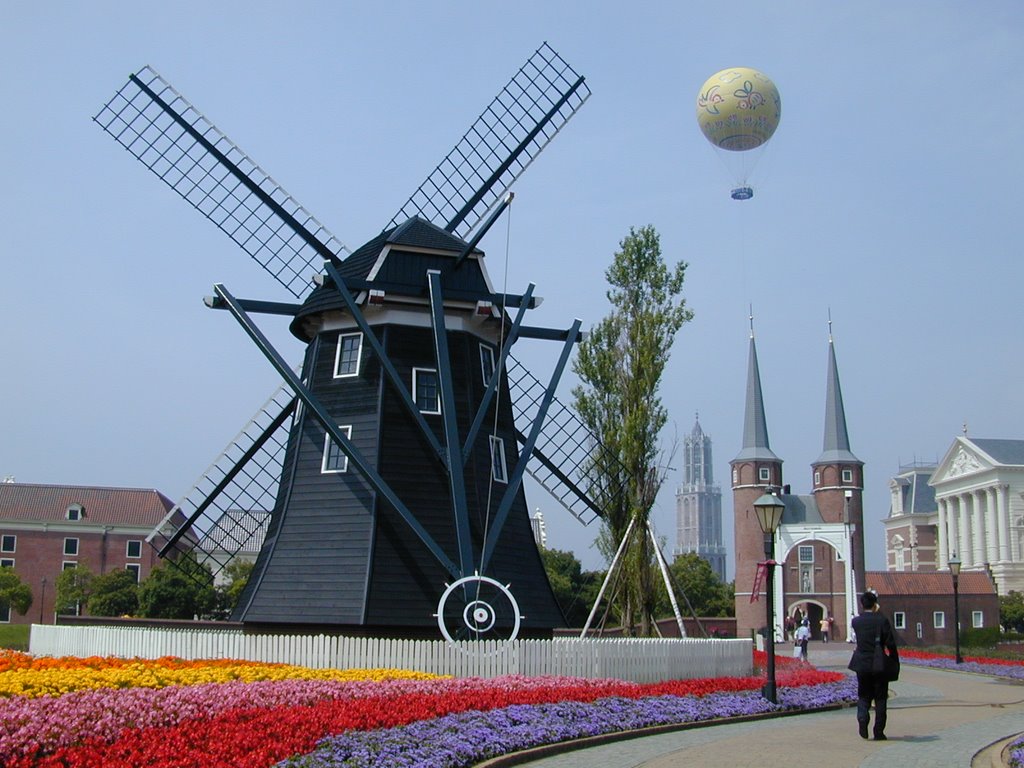
FROM HIRADO we sailed on to Kuroshima, an island of one thousand souls where, we were told by a Japanese Catholic nun, the population is eighty per cent Catholic, and "the rest," she said with a shudder, " are atheist." Etsuko and I arrived on the small island in time for the centennial celebrations of Kuroshima Church. Built by French missionaries, the interior of the church is identical to that of the original Urakami Cathedral that had stood at the heart of Nagasaki City until the atomic blitzing in 1945. After attending a service in the packed church to which many of the congregation had turned up in tractors, Etsuko and I sailed forth again, this time back to mainland Kyushu. Picking up our route from Sasebo City, we slogged on to what has to be one of the most surreal places in Japan. Huis Ten Bosch, named after the palace of the Queen of Holland, is a recreation of some of the Netherlands’ most famous and glorious buildings set amidst a canal network, windmills and some 400,000 trees and 300,000 flowers. But this bizarre tourist attraction not only serves as a testament to the Japanese penchant for theme parks and of having the knack to duplicate seventeenth-century architectural gems, it also serves as a tribute to the Dutch who brought Western culture, science and technology to Nagasaki’s shores some four hundred years ago.


And, beyond even being a resort, Huis Ten Bosch is also home to a good many Japanese who have purchased Dutch-style houses in Wassenaar, a settlement on a hill that overlooks the park. We spent a couple of days reveling in the theme park’s attractions and viewing the houses in Wassenaar, which have price tags ranging from
thirty-five to eighty million yen. Then, we hit the hot asphalt once more, traipsing up and over mountain roads, in the direction of Nagasaki City. I was stunned by the features of the middle-aged woman in the grocery store in Okushi hamlet, Seihi town. I had popped in to buy a bottle of wine for the night, and while handing over my money, I was struck by the fact that she looked more southern European than Japanese. She was a gorgeous, albeit rather mature, Carmen who looked extraordinarily out of place in the small, dusty shop, which sold little more than a mix of detergents, pink rubber gloves, clothes’ pegs and an assortment of snacks that all seemed to have passed their sell-by date. The woman asked me my name, and for the umpteenth time since arriving in Nagasaki prefecture, eyes glazed over in wonderment. "Tokyo was not part of her mother’s agenda for her. She didn’t appear disappointed about what lay in the cards for her: a life of helping out at the family store and one day caring for a husband and raising children. I smiled at the thought that she could be content with her lot in life, disguising the incredible sadness I truly felt for this young woman whose talents were destined to go to waste. "But what brings you here?" Chie chirped up after being well applauded for her performance, and so I explained about the walk, and how Etsuko and I were now en route to the museum dedicated to Shusaku Endo, the Christian novelist famed for such great works as Chinmoku (Silence). The mother rubbed her hands in glee, telling me that she knew Endo’s wife well and met with her every year in Sotome. "But we are Buddhist, you understand?" Chie emphasized again, making me wonder if they thought I had purchased the wine to perform some holy sacrament. "We have a lot of problems here," her mother butted in. "This is a very strange village. We have three Buddhist temples here," she added, biting her lip nervously. I started to wonder if the family had once been Christian, and what might be the problems with the temples, but I felt it might be unwise to pursue the subject. "So, have you read Chinmoku?" enthused Chie’s mother. I explained that I had, but more than a decade ago and that I planned to buy another copy in Nagasaki. On hearing this, the young woman and her mother leaped towards the backdoor, screaming out for grandmother. "Grandma, bring the Chinmoku!" they repeatedly yelled although I told them it wasn’t necessary as I intended to read it in English. "Please take grandma’s Chinmoku," Chie pleaded, "it would give us great pleasure," she continued as a frail, old woman hobbled forth with a copy of the novel about the persecution of Kyushu’s Christians and of two Portuguese apostates. Grandma wiped a tear from her eye as she carefully unwrapped the novel from its silk wrappings in a box, and took out a pink rosary. Turning to a page in the well-thumbed book, the old dear’s lips quivered as she read a passage aloud. Silence fell over the little shop and I only wished that I could have understood the part she was reading. The silver-haired dear smiled softly when I explained that it was better for her to keep the book; that I would read it in English. And then, to the strains of "Ave Maria," I found myself waving goodbye to Chie, her mother and grandma. Dusk had fallen, and as I strolled back along the narrow, dimly-lit street to the guesthouse, I wondered what had been the significance of the passage read to me, and if Chie was truly content with the life plan that her mother had for her.

Mammoth Undertaking


ALL PHOTOS BY JAPAN ON FOOT 2001/2002

PLANNING OUR zigzag route through Japan has led to a few tiffs en route. One of the bitterest fights took place shortly after leaving Hondo city, in Kumamoto prefecture. Standing at a junction out on a mountain road, Etsuko presented her case for why we should take the road turning south to Kagoshima prefecture, from where she intended us to take the leap from Kyushu to Okinawa prefecture. But I had another plan in store. My route was incredibly illogical. I wished first to head north, I explained as gusts of wind whipped at the oversized map I was holding, sending it flying heavenwards like a great kite before it came spiraling down into some bushes. After cutting east to Miyazaki prefecture, I continued, we could mosey down the coastline and then zigzag back west to Kagoshima prefecture. With eyes bulging ever wider, my partner looked like she was on the verge of apoplexy. It seemed Etsuko really didn’t like my idea. "You’re adding at least another three weeks to our walk in Kyushu; for what? The weather is already unbearably hot; Okinawa will be a blistering inferno by the time we get there. Are you mad?" The truth was that I was mad, quite barmy, in fact, about meeting a particular Japanese scientist, and I didn’t care if it involved adding another 350 kilometres—or even thousands more—to our walk. "What’s another three weeks? We’ve already been walking for over a year now, anyway," I challenged. "This guy is worth the extra effort and he’s worth being fried for later on in Okinawa," I added, knowing full well that I would probably live and fry to regret my words. Etsuko pouted, I pouted. I agreed that she was right, and we both agreed that I was an absolute idiot, but… "I’ve wanted to meet this professor for years. His work is mind-blowing; this man wants to resurrect the mammoth for God’s sake," I screeched. Even if we traipsed the extra distance I had no guarantee that Professor Kazufumi Goto was even in Japan, let alone available for an interview at the kindergarten he runs in Kumamoto City. "We may be completely wasting our time," Etsuko warned me. "It’s very likely that Goto-sensei is in Siberia right now, digging for mammoth remains." But realizing how much it meant to me at least to try and meet him, my partner caved in and agreed to go the extra distance. I felt swelling pangs of guilt well up inside of me as we hauled our luggage trolleys up the steep mountain pass. After three days of pounding the asphalt we entered Kumamoto City none the wiser as to whether we would be able to interview the “Mammoth Man.” Toddlers scampered here and there. Some chased each other around the kindergarten’s playground while others clambered over a life-size model of a woolly mammoth. Professor Goto had inherited the kindergarten from his mother, Tadako, who started the school when the scientist himself was just a child. A kindergarten seemed like an incongruous place to meet a man whose life dream is to bring back the woolly mammoth, a tusked giant whose heyday was the Pleistocene Epoch, a period stretching from 1.8 million years ago to the end of the last ice age eleven thousand years ago. Preyed upon by lions, wolves, sabre-toothed tigers and our ancestors, the Ice Age proved to be the ultimate death knell for this big grazer. Running a kindergarten must be a mammoth project on its own, I pondered as Professor Goto led us around classrooms where kids were immersed in a number of activities. Etsuko and I wondered if the scientist had forsaken his scientific plans for the more down-to-earth role as an educator. Professor Goto laughed at the idea, telling us that plans were on the burner for a trip to Siberia within the next three months. He is still determined to find the remains of a healthy mammoth carcass that will put him on the rung to realizing his dream. But, Professor Goto emphasized, he also sees his role of working with children as the other important vocation in his life. "Society is changing for the worse. The environment isn’t good for children these days and that’s why we are seeing so many problems such as bullying or school dropouts. Also, very few teachers are inspired enough to give children a dream," he said as we sat around a table in the open staff room. "Too many people are locked in a frame; I want children to grow up with imagination to have a dream. I also wish to retain a child-like mind—a curiosity for all life around me. As a scientist I’m always looking at life and I think that I should also be responsible for children too, as they are our future. I want them to learn the importance of life," he explained. Professor Goto says that too many people only want to focus attention on the fact that he plans to resurrect the mammoth. "The mammoth project is not only about resurrecting the past, it is also about learning the future. My work here and my work as a scientist go hand-in-hand," emphasized the fifty-one-year-old scientist as youngsters tugged at his sleeve to draw attention to their morning’s paintings. Etsuko and I were both impressed that Professor Goto had agreed to meet with us, but he said that he was excited to learn more about our project too. After reading a report on our walk in the Kumamoto Shimbun newspaper, Goto had even contacted Kumamoto TV to put them onto our project. "I am extremely moved by what you are doing," he announced, surprising both Etsuko and me because many people we meet can’t get their heads around the idea of why anyone would choose to walk through Japan. Most give us blank stares or simply grunt on hearing what we’re up to, some people laugh, believing we’re telling lies, or people just assume that we’re a couple of female loony losers. "I see your walk as something highly significant. It represents the very origins of the human race, of a time when man branched away from the ape and started to evolve. Man evolved through walking; through making journeys," the scientist elaborated. Professor Goto has been pursuing his mammoth project for more than ten years now. Once he has found frozen sperm or a well-preserved frozen carcass of the beast out in the wilds of Siberia, he will then have acquired the key to bring it back to life. "First of all, I want to emphasize that the mammoth has nothing to do with dinosaurs. I’m not interested in resurrecting dinosaurs or creating Jurassic Park," Professor Goto laughed after explaining that Russian scientists have spent fourteen years working on an Ice Age Park, "Pleistocene Park," that is the intended habitat of the animal once resurrected. "I’m interested in bringing back an animal that once lived alongside man, and this will become possible once we find the frozen sperm or carcass," continued the biologist who is the first person to have succeeded in using dead sperm to fertilize a cow, resulting in the birth of a healthy calf in 1990. With dead sperm, Professor Goto has also raised mice and rabbits. "This success of creating life from dead sperm raised the huge question of ‘What is death?’ Basically, as long as DNA is viable there can be life and this gives huge hope for the survival of many threatened species on our planet," he enthused. Professor Goto believes that there is no reason why the dead sperm of a mammoth would not be able to fertilize an elephant’s egg, which would then be planted back in the elephant’s uterus and eventually result in an offspring that is fifty per cent mammoth. The woolly mammoth, he says, was about the same size as an African elephant. "If a female half-mammoth, half-elephant is born and reaches maturity, its egg cells would be collected and fertilized with mammoth sperm to produce a purer hybrid mammoth. Over successive generations of impregnating female hybrids, a beast increasingly close to the original mammoth, which stood around three metres and weighed up to four tons, could be created," explained Professor Goto. The scientist is undaunted by the fact that there have been few officially reported findings of frozen whole-body woolly mammoths in Siberia over the course of the past one hundred years. "There are more findings than we hear about. I daresay many are kept secret because people have profited by selling the tusks for ivory. On the other hand, there are accounts of elderly Russians having dug up whole carcasses for the purpose of eating the meat," he laughed. "Can you imagine that, meat frozen for ten thousand years? People eating mammoth steaks?" The implications of a technology that can produce life from death are mind-blowing. "So, if you found the carcass of a prehistoric man, it should be possible to bring our ancestors back to life through either using dead sperm or DNA?" I asked. "In theory, it should be possible," agreed Professor Goto. "Of course, you would have to find women who are happy to partake in such an experiment, and beyond that society would raise huge ethical barriers to it ever taking place," he concluded.

Valley of the Gods

ALL PHOTOS BY JAPAN ON FOOT 2001/2002

TORRENTIAL RAIN pelted down as we plodded on over mountain roads that took us through the Aso-Kuju National Park. As the month of June drew to its end Etsuko and I battled on through the elements — a mix of either typhoon rains or days where temperatures soared to thirty-six degrees centigrade. We passed through Takachiho, where we enjoyed a Yokagura dance performance at Amanoiwato shrine, one of Japan’s most sacred sites. The shrine is said to be the home of all the gods from which the Imperial line has descended. Not far from Amanoiwato shrine, across the Iwato River, is said to stand the cave in which the Sun Goddess, Amaterasu, hid after her evil brother Susanoo went on a wild rampage, trampling and defecating over the goddess’s rice fields.
The average Joe Soap, Mary King or Shimabukuro Etsuko is not allowed to venture out to Amanoiwato Cave, but we did stroll out to another cave along the same river where it is believed all the gods gathered to discuss how they could lure Amaterasu from her cave and thus restore light to the world. Apparently, the goddess Ameno Uzume performed a lewd dance in front of the cave, waving her genitals at all the gods, who creased up with mirth at the wild spectacle. Becoming curious about the commotion, Amaterasu peeked outside her cave only to catch a glimpse of her face in a mirror.
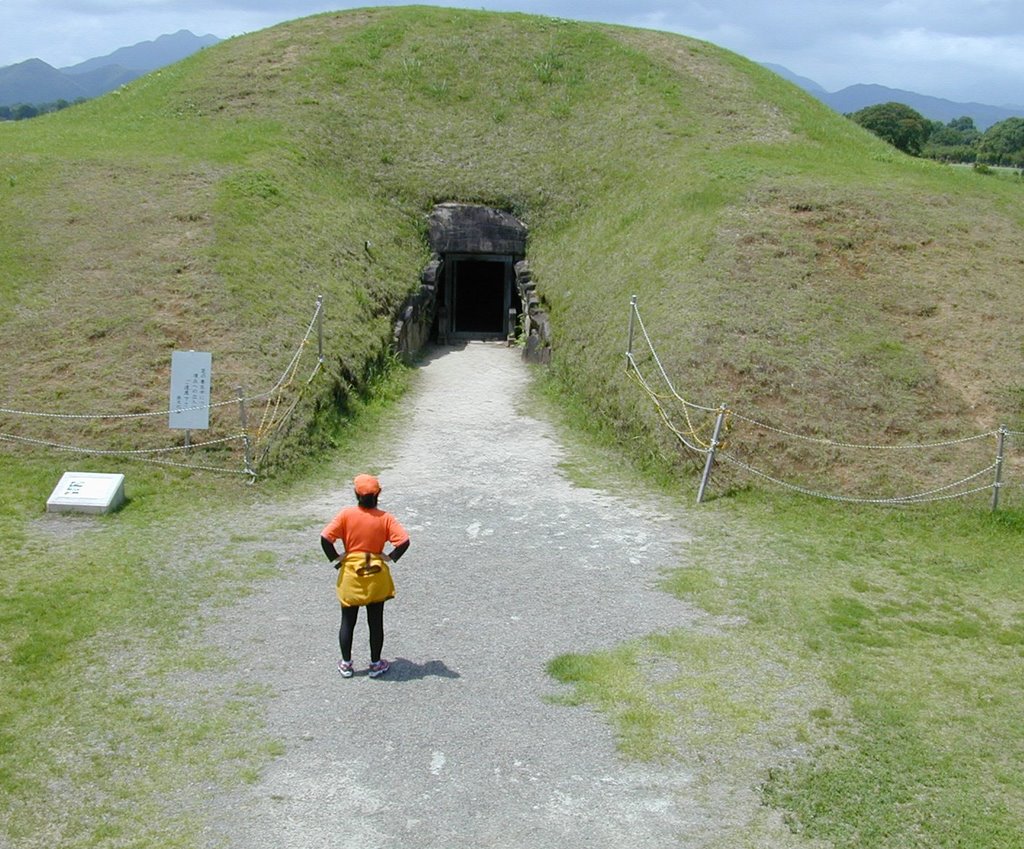
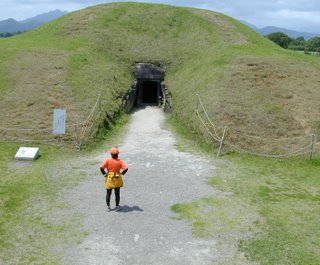
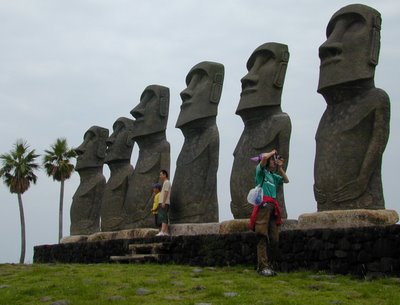
Takajiro, a god of enormous strength, then pulled back the boulder covering the mouth of the cave and together, the gods pulled Amaterasu back into the world. In Saito Cty, also in Miyazaki prefecture, we strolled out through an area that is dotted with more than three hundred ancient tumuli—a verdant area that is Japan’s equivalent of the Valley of the Kings and Queens. The sun was a bloodshot eye as it drifted below the horizon after we had spent an arduous day traipsing out of Miyazaki City. Out in Futo hamlet, Etsuko and I found ourselves without accommodation for the night. Kipping out on the beach had all felt very romantic at the time. "How lovely it would be to sleep under the stars," Etsuko had said to me. "Yes, indeed," I had oozed. How idyllic to spend the night listening to the soporific lapping of waves and feeling the gentle sea breeze on our faces as we lay tucked in our sleeping bags. Surely, nothing could be more beautiful. But neither of us would grab more than the odd wink or two of slumber that night. Miyazaki’s mosquitoes viewed us as a potential banquet and as they pursued their kamikaze conquest, Etsuko and I tossed around in misery, waving frantically to protect ourselves from their savage attacks. Before the sun had even risen, we were back on the road, completely exhausted from the nightlong battle and covered in a mass of huge, incredibly itchy pink bites. With our pedometers having now hit just over seven thousand kilometres, we continued on down the coastline, stopping off for a few hours at Sun Messe Nichinan, a park that has not only attempted to recreate Easter Island with its Moai statues, but has also taken a stab at recreating its own version of England’s Stonehenge. The stone circle was a rather sad affair to say the least, but the Moai were an uncanny experience for both of us, reminding us of the one thousand or so statues we had seen some eight years before out on what is reputed to be the world’s most remote inhabited island. In fact, it was during our time on Easter Island, which lies 3,600 kilometres away from the South American coastline and Chile under whose jurisdiction the island falls, that we bumped into a Signor Martin, an elderly gentleman who had startled us with the fact that his grandfather hailed from Okinawa. As we tucked into a plate of cerviche, a delicious South American speciality of raw tuna marinated in vinegar and lemon, Signor Martin had been unable to conceal his excitement on discovering that Etsuko originates from Japan’s most southern prefecture. He then went on to regale us with the story of how his grandfather had been swept up on the shores of Easter Island, fairly well on the brink of death. "He was a tuna fisherman and with the rest of his crew was lost at sea for weeks, perhaps even months," said Signor Martin. "He was pretty well near dead by the time he landed on this speck of an island, but my grandfather stayed, married a local woman and never went back to Okinawa. He died when I was a small child, but I remember that he spoke with great love for his homeland," Signor Martin had told us, impressing upon us the fact that no island is ever truly an island; that nowhere in the world has ever been isolated, unknown or free from outside and far flung influences.


Onwards to Okinawa


ALL PHOTOS BY JAPAN ON FOOT


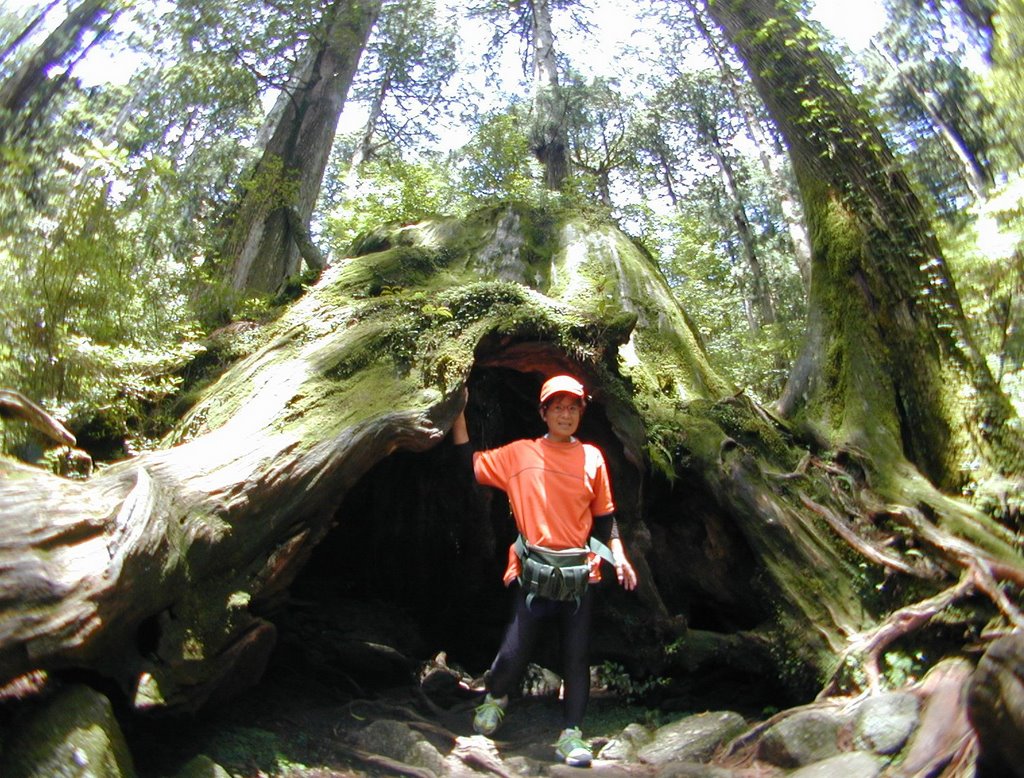
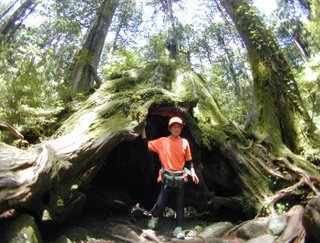
YAKUSHIMA MARKED the end of our walk through Kyushu. This island that lies off the southern tip of Kagoshima prefecture has been designated a World Heritage Site for its unique flora and fauna. Despite threat of rain—apparently, there’s invariably a downpour up in the mountains—it turned out to be a hot muggy day as Etsuko and I found ourselves clambering over lichen and moss-covered rocks out in this veritable fairy-like world. We spotted deer scampering and snuffling in the bushes; groups of macaque monkeys swung without a care through the tendril-like branches of the great Yaku sugi (Japanese cedar) trees for which the island is renowned, and even a snake didn’t flinch as we approached it; instead it nonchalantly slithered past our feet. Taking tentative steps along precarious tree trunks that span the forest’s gurgling rivers and streams, we spent a day hiking up to the largest Jomon-period sugi—a cedar estimated to be between 2,600 and 7,200 years old that also boasts a whopping girth of 16.4 metres. A late lunch was taken at Wilson’s Stump, where we observed in wonder the grotto-like grandeur of this huge cedar trunk, some 4.39 metres in diameter, inside of which tourists had huddled to peer up at the shafts of sunlight that beamed down upon a small Shinto shrine. With hishaku (wooden shrine ladle) in hand, Etsuko and I scooped sweet mountain water from a stream that trickled through the trunk of the tree and refreshed ourselves before clambering on up to Takatsuka Hut, where we planned to bed down for the night. Deer nervously twitched and sniffed at the curry-essence air as Etsuko and I sat under the stars, slurping our spicy Cup Noodle dinners. The following day, we returned to Wilson’s Stump in time for a late picnic-breakfast.

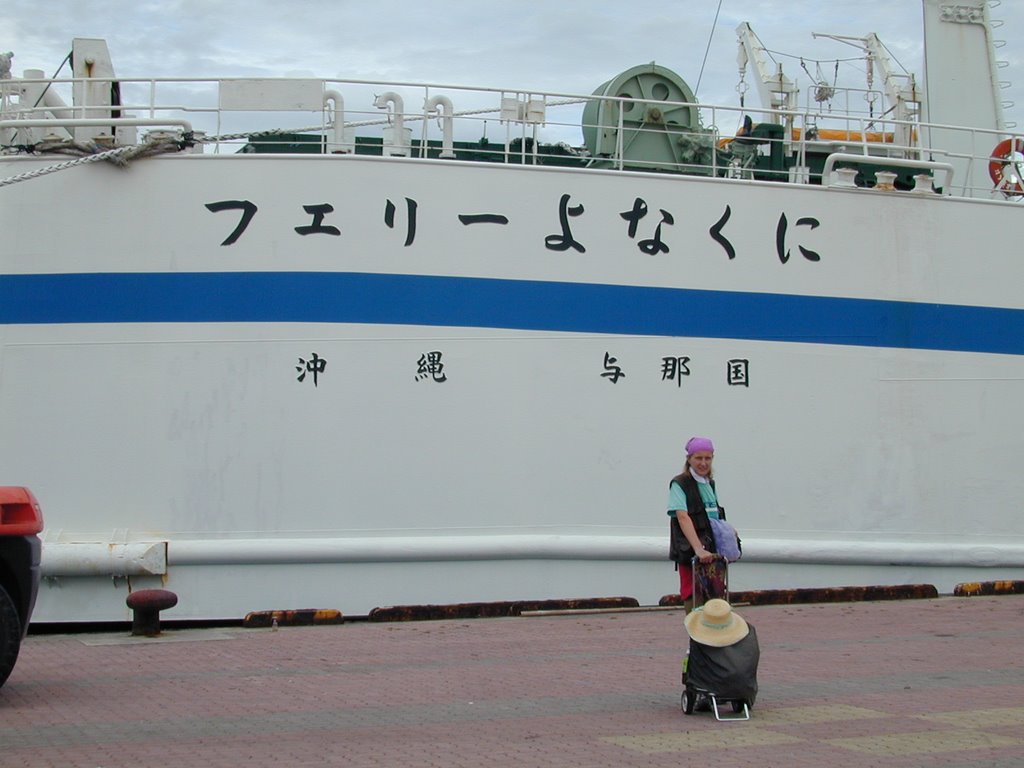
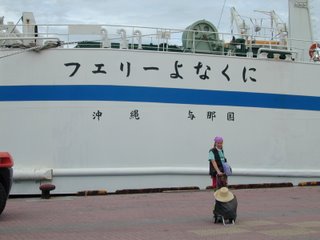
Named after the botanist who found it, Wilson’s Stump is said to be the remains of a tree that was cut down on the orders of the sixteenth-century warlord Toyotomi Hideyoshi. Apparently, the wood was used for the construction of a building to house a great Buddha statue at Hoko-ji temple in Kyoto. This part of the forest is a truly magical place and I was only grateful that we had at least five minutes of it alone to soak up its spiritual serenity before a horde of a hundred or so camera-toting tourists clumped on through. We packed up and continued with our descent, leaving the horde to continue with what looked like a never-ending rigmarole of setting up victory-V group shots. The Queen Coral 8 spirited us out through the choppy blue waters of Kagoshima Bay. Fangs of water clawed at the side of the ship as we rocked, heaved and rolled out into deeper waters until the speck that was Kyushu had completely disappeared from view. Like many other passengers, Etsuko and I lay groaning and moaning on our futon, turning green at the gills and hoping that the motion sickness tablets would soon knock us out. Typhoons had been lashing Japan’s shores for more than a month now, and yet another was on its way. It was with huge relief that—twenty-four hours later—Etsuko and I finally staggered off the ship at Motobu Port. We breathed in the salty, sea air and saluted the direction of Japan. A lump welled up in my throat and I started to choke on tears. We were now approaching the end of our walk; a journey that had already surpassed the fourteen-month mark and a foot-slog of more than 7,300 kilometres that had taken us from a windy, freezing northern outpost of Hokkaido to the northern shores of Okinawa. It had been an exhilarating and exhausting adventure and it would shortly end on Yonaguni Island. We both felt that the walking, freedom and challenges had become an integral part of our daily lives, and it had reshaped who we are and what we value. Biting back tears, Etsuko and I tugged our trolleys along the asphalt road and into Motobu town. The gregarious strumming of an Okinawan sanshin drifted towards us from afar, as if carried by a messenger on the early evening breeze.


PHOTOS BY JAPAN ON FOOT 2001/2002


Monday, May 08, 2006

Okinawa shots


READ THE BLOG OF THE JAPAN ON FOOT WALK

HOKKAIDO
HONSHU
SHIKOKU
KYUSHU
OKINAWA


Etsuko looks out on the Pacific Ocean from the Standing Rock.


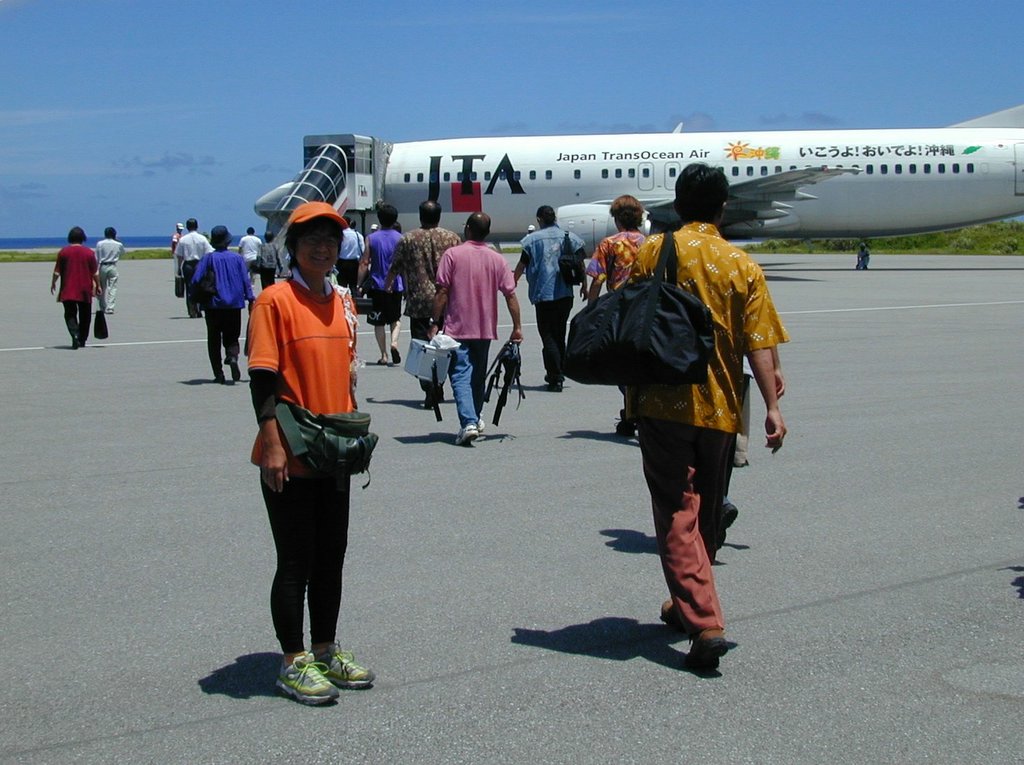
Etsuko gets ready to board a plane that will fly us back to Naha.


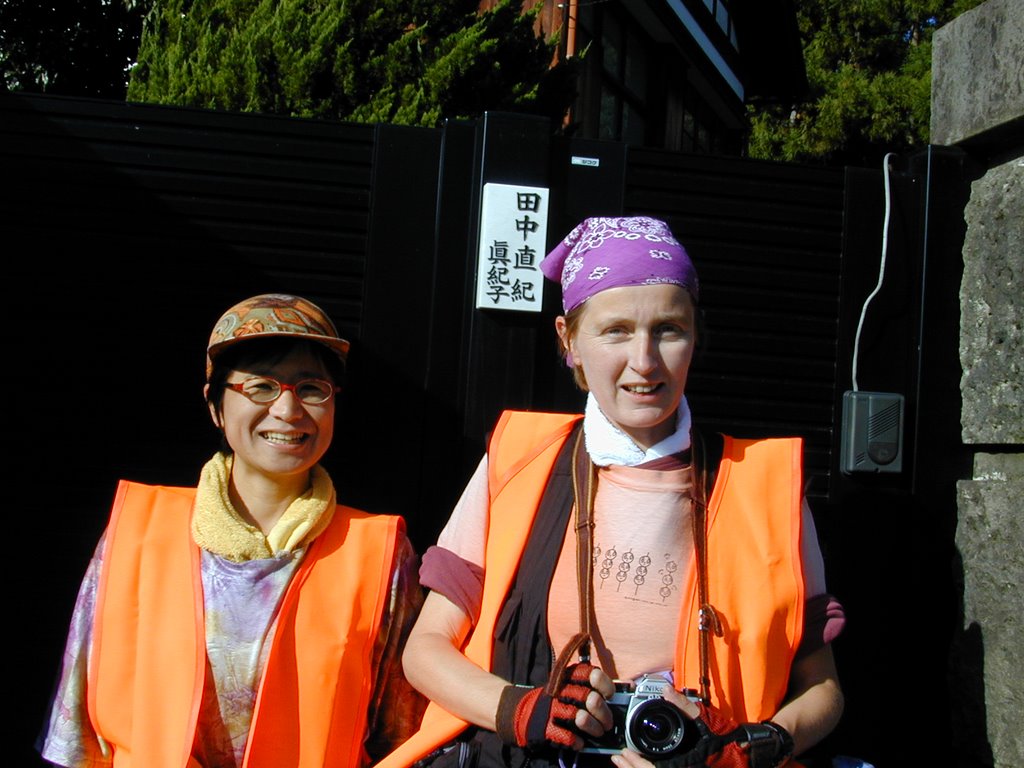
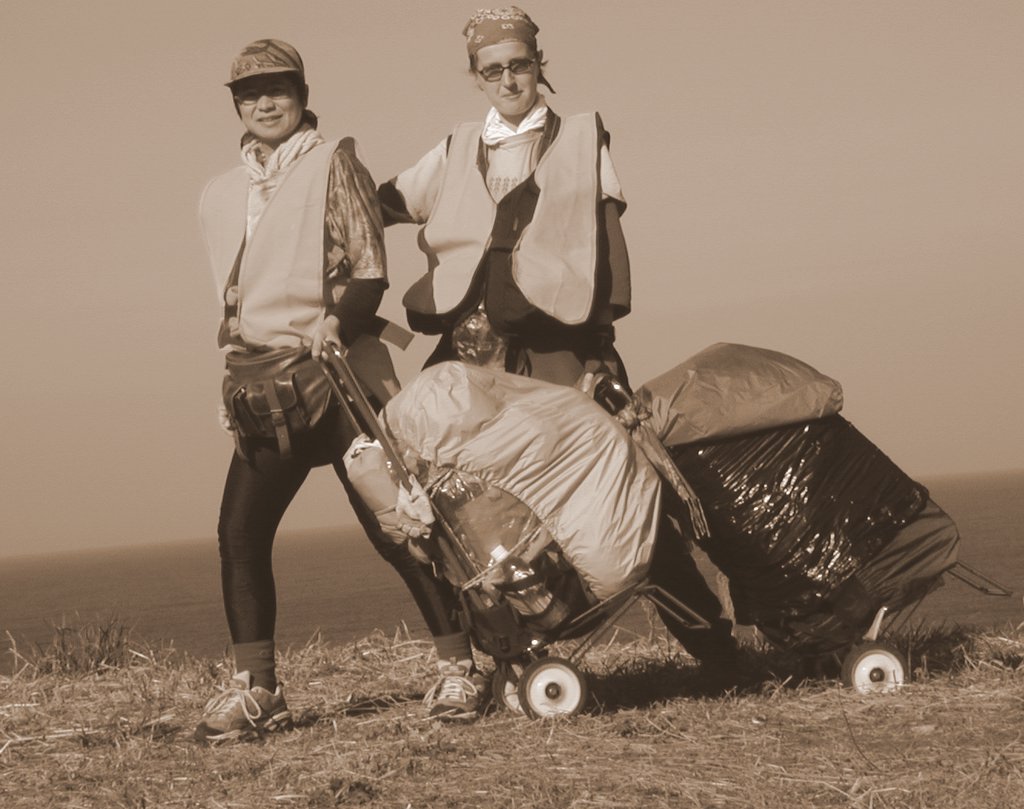
Girls on the road


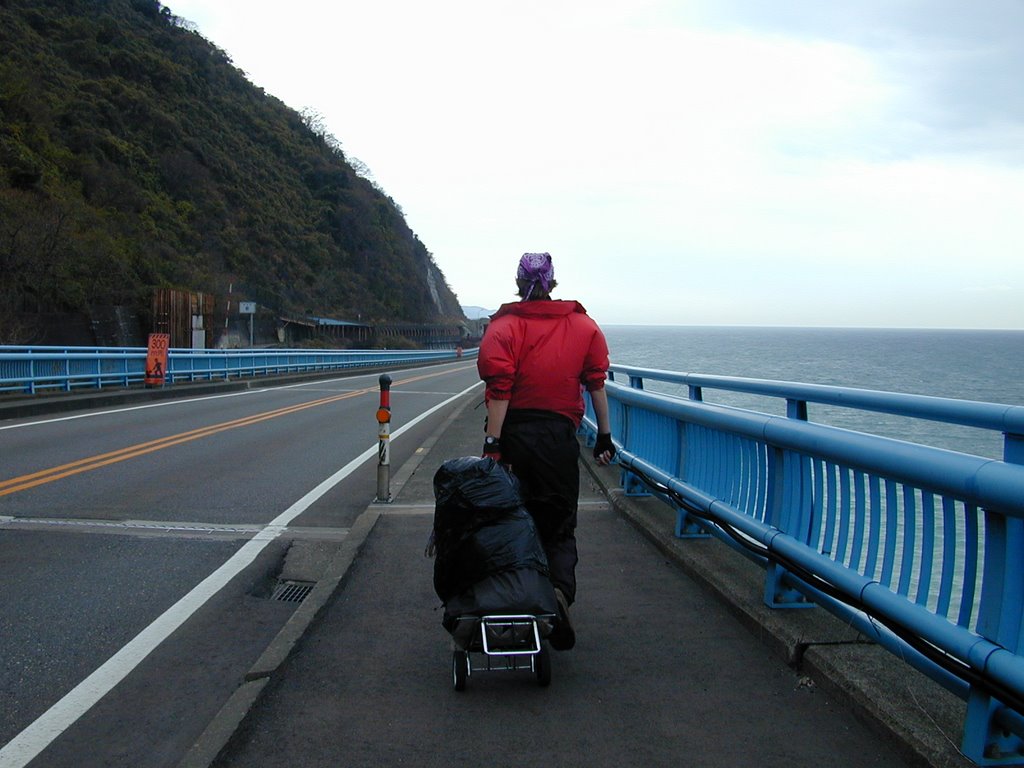
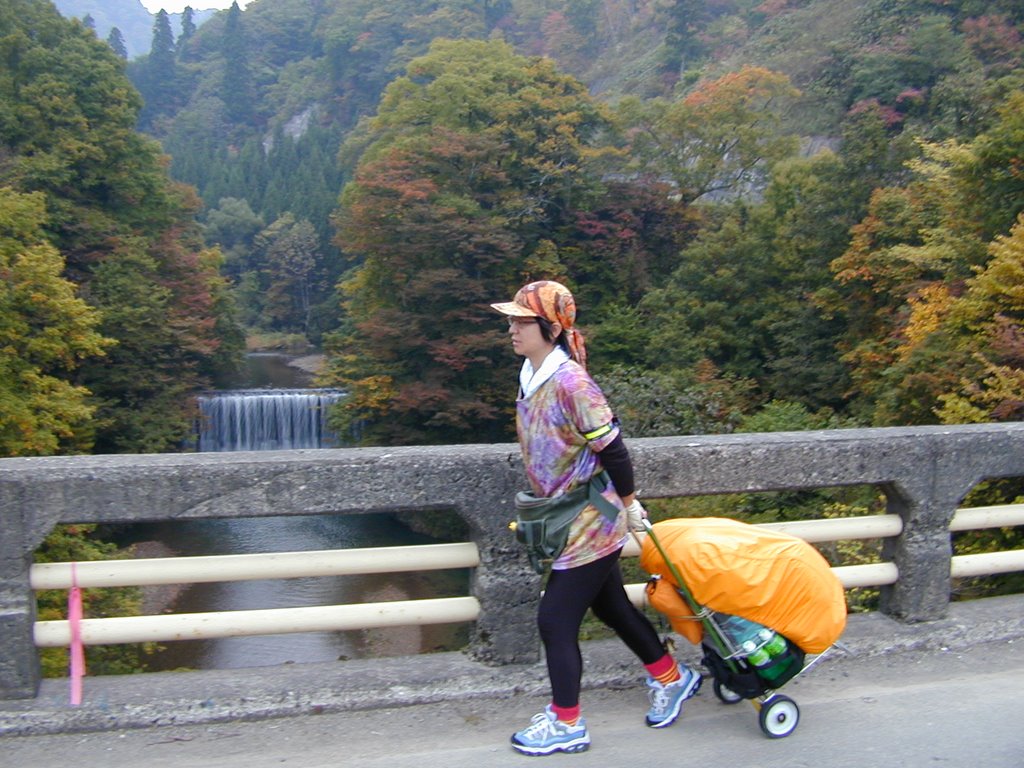
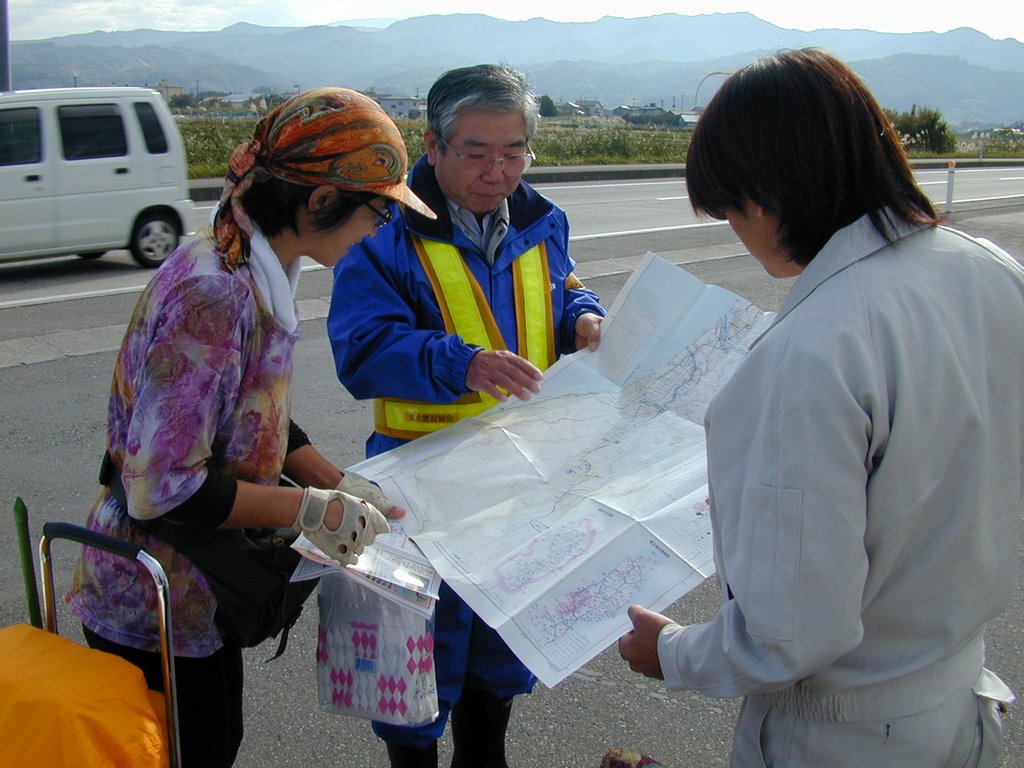
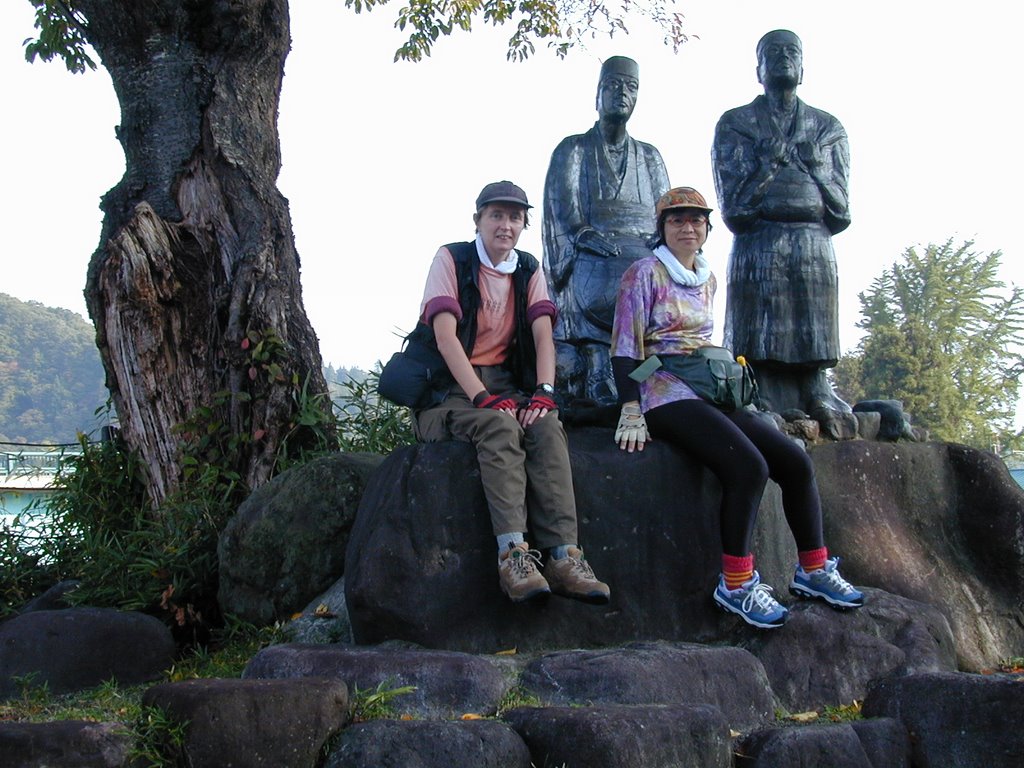
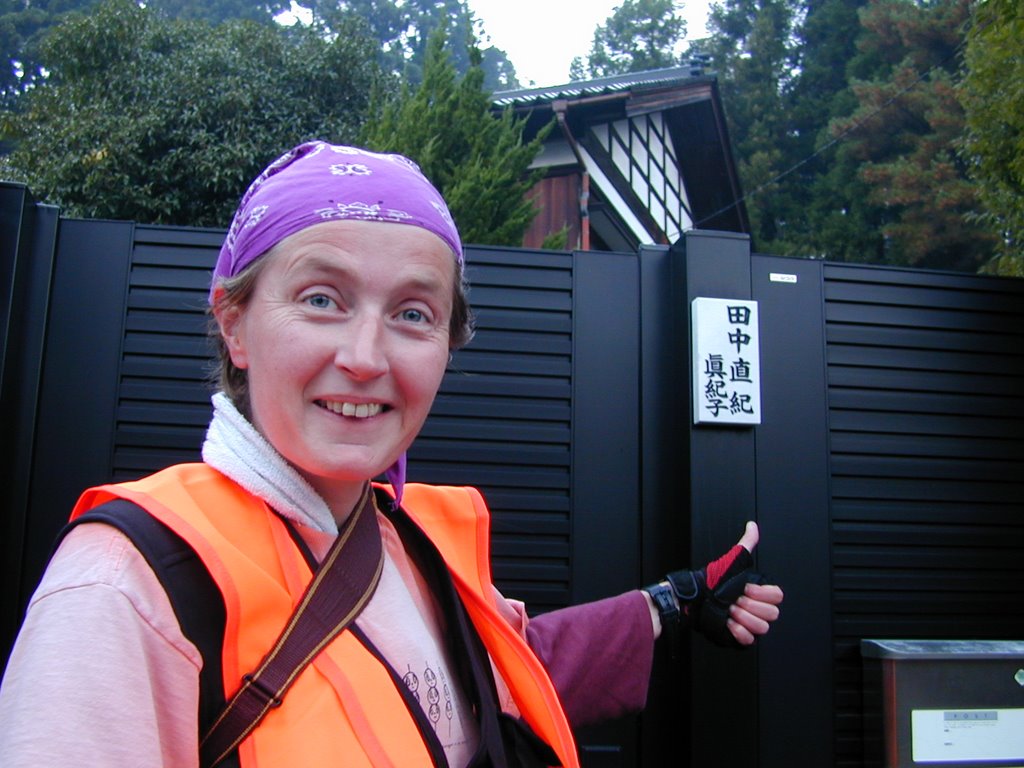
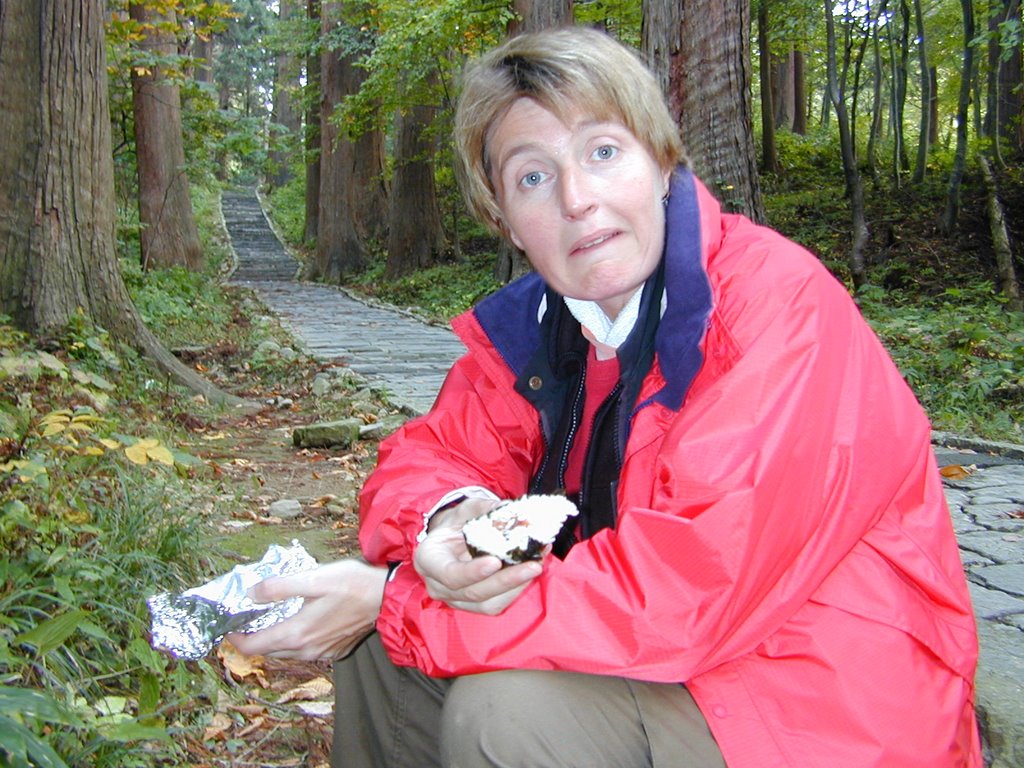
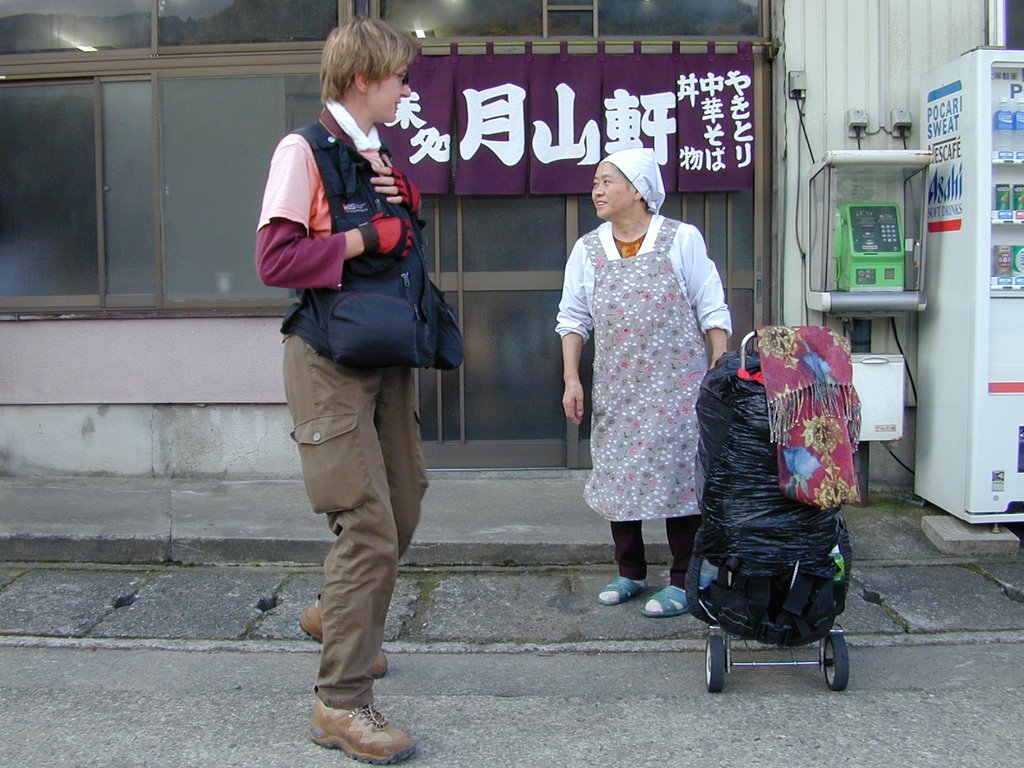
Etsuko and Mary out on the road
Posted by Picasa

Thursday, April 27, 2006

Emails in Japanese from Fans of the Road

北海道から読めましょう

READ BLOG FROM HOKKAIDO

TRY TO TRANSLATE THESE JAPANESE EMAILS HERE

*Please note that these emails first appeared on what was the original Japan on Foot web site, which was maintained by Etsuko during the course of the walk through Japan.*

From: Road Walker
Date: Wed Dec 5 17:28:09 2001

親不知

お久しぶりです。
ずいぶん進んでいてびっくりしました。
私も,親不知を通りましたが,
あのスノーシェルター(っていうんですね。初めて知りました)の歩道のない道には,
はっきり言って恐怖を覚えました。
抜けたときのホッとした気持ちは今でも覚えています。
では,ゆっくり,ゆっくり,頑張ってください。


From: きくち

Date: Sun Nov 25 00:39:30 2001

新潟県のセーブオン店長です

 先日は、お立ちより頂き有難うございました。
ほんの少しの時間ですが、貴重な体験話有難うございました。
足の疲れ休みになりましたか?
名前も聞かず、名のらずですみませんでした。
目的の地に着かれるのは何時になられるか存じませんが、
私の実家は、酒屋を営んでおりますので、いつかお立ち寄りください。
その時は、おいしいお酒を、お出しいたします。
まだまだ続く長い道のり、お気をつけて!

又、時々ここを拝見させて頂きます。

新潟県三島郡和島村 菊地


From: 深沢/中野
Date: Wed Nov 14 15:43:51 2001

おなつかしゅうございます!!!

メアリーさん、島袋さん、お元気ですか!
だんだん寒くなってきたので風邪など引いていないか
と心配しています。
デジカメ日記の「月山へ行く道」のメアリ?さんの後
ろ姿に思わず「メアリーさ?ん!」と呼び掛けてし
まった私達です(髪が伸びて、なんだか違う人みた
い)。
東北は、おふたりの好きな日本酒と温泉の宝庫です
ね。楽しんでください!!!

東京への到着はいつごろになるんでしょうねえ? そ
の時にはぜひお会いしたいものです! きっと連絡し
てくださいね?!


From: Msa Minade
Date: Mon Nov 12 01:12:46 2001

こらから東北地方は、体に厳しいですね!

島袋さん・メアリーさんへ
この旅を北海道のスタートから拝見させて頂き、貴方たちから勇気とガッツを頂いています!
これからは、東北地方も雪が降り始めてますので御体を大切に旅を進めて下さい。


From: マユサ
Date: Wed Oct 31 09:12:11 2001

明日から11月・・・

島袋さん・メアリーさん おはようございます
秋田県を過ぎて山形県へ入っていたのですネ(^^)
マユサの方は、21日「第8回四万十川ウルトラマラソン」100キロの部走ってきました。
エメラルドグリーン色した「四万十川」綺麗でした・・・実際に見れて良かったです。
この自然をこれからも大事に残して欲しいなあ?と思いました。
寒くなってきたので、風邪などひかないよう身体に気をつけて歩いてください!!
秋田から応援してます(^_-)

http://www.amy.hi-ho.ne.jp/mayusa/


From: 甲16
Date: Sat Oct 20 00:49:02 2001

おひさ!

こ んにちは。阿寒湖のライダーズハウスでお会いした釣り人です。10000ヒットおめでとうございます。HPはちょくちょく遊びにきていたのですが、書き込 みするのを忘れてました。事故なども無く、お元気そうで何よりです。この時期の東北地方は雨が多いので、風邪などひかぬようお気をつけください。
私のHPにもぜひ遊びにきてください。偏ってますが…。

http://www5d.biglobe.ne.jp/~keenedge/


From: Kimoto
Date: Wed Oct 17 14:54:17 2001

また来てね!

木元(母)です。
家で採れた野菜や栗などあげたかったけど、荷物を多くさせたらいけないと思って、せっかくきてくれたのに何のおもてなしも出来ませんでした。
今度はゆっくり遊びに来てね!頑張ってね!!

http://www.hana.or.jp/~kimo


From: Kimoto
Date: Wed Oct 17 14:47:21 2001

がんばってね!p(^▽^)q

先ほど(10/17 お昼)立ち寄ってくれた、惣菜屋の木元(娘)です。HPをよく見せて頂きました!
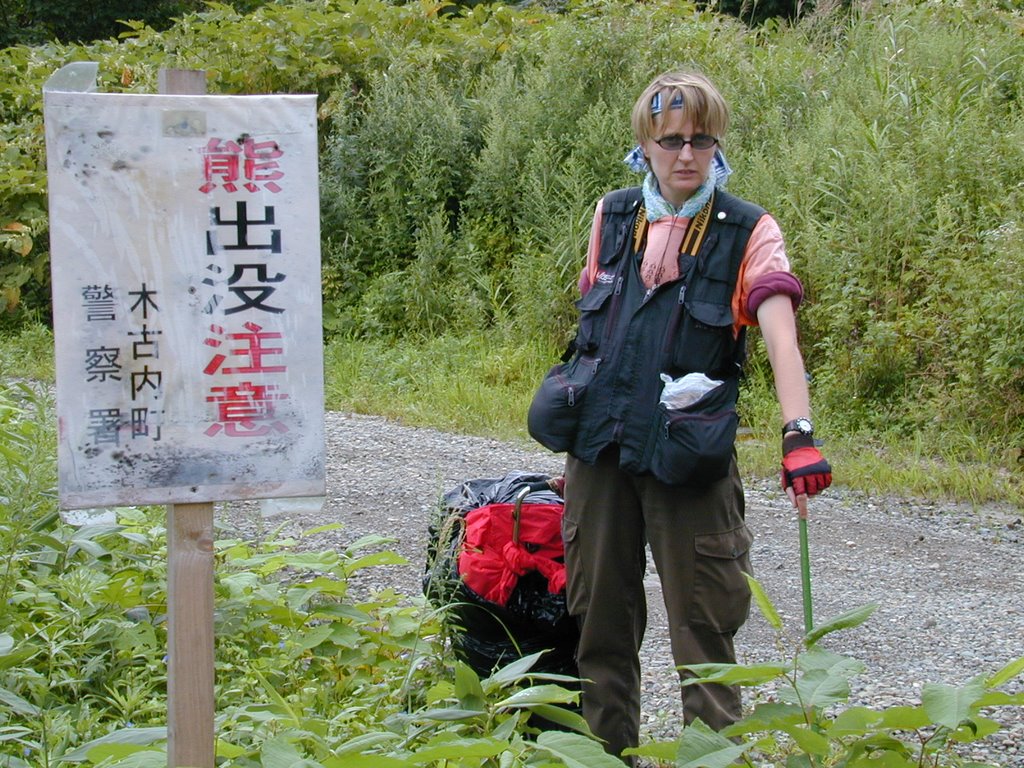
こ れから先、この辺(秋田県内陸山沿い)あたりを歩くときには、本当に「熊出没注意」!!今年は例年以上に多いみたいなので十分注意して、何かあったらすぐ 近くの民家か警察に行って、安全を確保してくださいね!来店の際に教えてあげればよかった、とつくづく思いました(??;)あの時間帯は忙しかったもの で・・・
応援してます!頑張ってくださいね!!


From: aon
Date: Mon Oct 15 17:42:18 2001

お久しぶりです。

ひさびさにホームページをみてみたら、なんと、10000番目の訪問者でした。なんか商品もらえる?
とにかくお元気そうで、なによりです。会社がなつかしくなったら、メール下さい。


From: かじび
Date: Mon Oct 15 09:43:16 2001

秋田の道もゆっくりと、楽しんで

はじめまして!
先日のTVニュース&マユサさんのメールを見て、応援に来ました。
すごい壮大なチャレンジですね。感服しています。
昨日通られた阿仁の道は9月第4日曜に行われた
秋田内陸100キロチャレンジマラソンのコースでもあります。
お二人のチャレンジには足元にも及ばないかもしれないけど、
ボクも、マユサさんも参加しましたよ。
そして、マユサさんは見事完走されました。
ボクは力及びませんでしたが、秋田人情を満喫し、また来年の出場を心に決めました。
チャレンジ精神を持っていろんなことをしていきたいとも思ってます。
これから通られる横手市・山内村は僕の住んでいる増田町に近いので、
出来たら直接応援に行きたいと思ってます。
山内村を通る際は、ぜひ道の駅でイモノコ汁で力をつけてしていってください。
山内イモノコは日本一のおいしさだとボクは思います。
では事故やけがの無いよう、がんばってください。


From: マユサ
Date: Sun Oct 14 19:53:19 2001


クマに注意してネ!!

島袋さん、メアリーさん、こんばんは
今日、秋田県阿仁町の「道の駅」でお会いした
マユサ・・・熊谷@秋田です。
朝晩、冷え込むようになり霧が出るようになって来ました。山越えは、見通しも悪いので十分気をつけて歩いてください。私も日本全国マラソン大会で遠征してますので、またどこかでお会いしたいです。
頑張ってゴールを目指してください!!

マユサのHPアドレスは、下記です。
http://www.amy.hi-ho.ne.jp/mayusa/
_


From: Road Walker
Date: Fri Oct 12 13:24:45 2001

長い長い旅ですね。

久しぶりにHP訪れました。大館まで来たのですね。
私も徒歩縦断をしたときに大館を通りました。
その時に観光案内所で,偶然に新聞記者の人と出会い,
取材してもらって新聞に載ったことを思い出しました。
ジグザグに歩いているので,本当に長い旅ですね。
前回も書きましたが,ゆっくり頑張ってください。


From: くー
Date: Thu Sep 27 14:11:07 2001

はじめまして

はじめまして。北海道の情報を集めようと思ってHPめぐりをしていた所、こちらに辿りつきました。すごいチャレンジですね!私は現在青森市内に住んでおりますが、生まれたのは十和田市です。お二人も通られたようですね。
もう少し早くこちらのHPを知っていれば良かったなぁと思いました。これからも、たくさんの方と出会い、良い旅を続けて下さいね!


From: Road Walker
Date: Mon Sep 17 17:58:08 2001

ゆっくり,ゆっくり,頑張ってください。

 初めまして。Road Walkerです。ずっと前から何度もこのページを訪れていたのですが,やっとメッセージを書く暇ができました。
 私もずいぶん前になりますが,徒歩で日本を北から南まで歩いたことがあります。その時は,宗谷岬から沖縄の波照間島までほぼ最短距離を歩いたので,約100日余り,3250?の旅でした。
 その苦労(?)を体験しているので,大回りをしながら歩くという行程に,ただただ感心し,驚くばかりです。今後とも体調に気をつけて,ゆっくり,ゆっくり,頑張ってください。
 また,暇を見つけて見に来ます。よかったら,私のHP(できたばかり)も見に来てください。では。 http://plaza11.mbn.or.jp/~WalkerontheRoad/


From: 大庭 史榔
Date: Thu Sep 13 17:32:31 2001

お元気ですか?

 島袋さん、お元気ですか?
あれからまだ数ヶ月しか経っていないんですね?

 何か、日本中(世界中?)の話題になってるみたいですね?
ちょっとした旅行かと思っていたのに・・・
 お身体に気を付けて頑張ってください!!!


From: 民宿鈴木
Date: Tue Sep 11 19:57:33 2001

雨にも負けず風にも負けず。

どうも。下風呂に来た時に泊まっていただきありがとうございました。無事に恐山を通過して良かったです。無事に通れるのか心配でした。台風が来て足場が悪いですが気を付けてこれからも良い旅を続けてください。


From: keiko
Date: Tue Sep 11 10:47:32 2001

今日の新聞で知りました。

 はじめまして。 
今日の新聞で、今青森県内を通過中、ということを知りました。大変そうだけれど、何だかうらやましいです。私も何時かトライして見たい、なんて思っています。

 どんな道中記になるのか、楽しみにしています。

 私はお2人が三沢に行く途中の町に住んでいます。お会いできるといいですね。(もしかした、らもう通過してしまったかしら?)

 何はともあれ良い旅でありますように!


From: kapapa
Date: Fri Aug 31 23:30:19 2001

私も北海道へ

はじめまして!
私は名古屋で地理について学んでいる大学生です。
旅行好きが集まっている私のゼミでは、突然、○○へ行こうの会とういのがたびたび発足されます。
今回は、再来週にいきなり日本の最果て宗谷岬へ行こうという計画が持ち上がり、あわてて情報収集をしていたら、ここにたどりつきました。
今はどのあたりを歩いていらっしゃるのでしょうか。
私たちは道北を巡る予定です。
きっと歩く事で、ふとすると見逃してしまうような発見もなさっていることでしょうね。
私たちも単純な観光だけでなく、そこに暮らす人々の日常なぞ別の視点から見て、何か得られたらいいなと思います。
どうか、体調には十分気をつけて、よいたびを。


From: 木村真作
Date: Thu Aug 23 01:19:52 2001

今どの辺でしょうか?

島 袋さん&メアリーさんこんばんは。洞爺湖の大和旅館で一緒だった木村真作です。今どのあたりを歩いていらっしゃるのでしょうか?私はもう京都に帰ってまい りました。いま台風11号が接近していると思いますが、十分気をつけてください。またちょくちょくホームページもチェックさせてもらいます。それでわ!!


From: 黒木
Date: Fri Aug 17 19:54:14 2001

早くも3ヶ月過ぎたのですね

島袋さん、思ったより(もっとキョロキョロするかな?と思っていました)早いペースで旅行されているようですね!
日記を見ても良い旅のようで嬉しいです。
夏の暑い時期を北海道で、というのは賢い考えのようですね。
以前に話した那須の友達は5月?6月に53日かけて四国を歩き、照り返しも加わった暑さに閉口したそうです。彼らはいま単車でロシア横断中です。こちらも元気そう。
島袋さんとメアリーさんも、元気が一番!で、これからも楽しい旅を続けてくださいね♪


From: とき
Date: Fri Aug 17 17:40:33 2001


はじめまして。スタートしてからもう随分たつんですね。歩いて日本縦断なんてすごいですね。鳥肌たちました。今どこらへんに居るのでしょうか。わたしは写真をやっているのですが、是非お二人を撮りたいなと思いまして・・・
もし、会えたなら、写真を撮らせてください!!体に気をつけてがんばってくださいね!


From: フレーフレー
Date: Thu Aug 16 10:44:03 2001

身体には気をつけて

「やりたい」思ってもなかなか実現できないこと、ならば応援だけでもというのが今の私にできること。
旅、人の心を癒してくれる。そして人、言葉をかわし、様々な文化を吸収していける。
そんな経験をされているお二人の健康とこれからを祈って
乾杯!


From: ドウエン
Date: Sat Aug 11 13:48:49 2001

良い旅、そして発見、出会いを!

メアリーさん、島袋さんはじめまして。
先日、日月火で横浜から宗谷岬までドライブをしてきました。
駆け抜けただけですので旅をした気分ではありませんが、まだ紫陽花が綺麗に咲いていることに驚いたり多くの新鮮がことがありました。
日本をめぐられる旅行記を楽しみにさせて頂きたいと思います。
お二方の旅が素晴らしい発見と出会いで満ちていることをお祈りします。


From: りょう&laure
Date: Wed Aug 1 21:42:46 2001

応援してまーす

はじめまして!
意義のある大きな旅をしていて素晴らしいなと
思います。何もお手伝いできないけれども
ネットから応援していますね!
広大な北海道ももう少しですね?。
島袋さん(同郷で嬉しいです)、メアリーキングさん
頑張って!


From: 智子
Date: Wed Jul 25 15:23:26 2001

とうとう峠を越えたのですね。

ちょっとホームページを見ない間に、峠を越えてしまったのですね。
体の調子はいかがですか。
あまりいい天気とはいえませんが、北海道の夏を楽しんでいってくださいね。


From: 渡辺
Date: Sat Jul 21 12:29:05 2001

ずいぶん南に来ましたね

メアリーさん、悦子さん、お元気ですか。
ずいぶん(北海道の)南まで来ましたね。
東京は、本当に暑くて暑くて、毎日サウナの中で暮らしているようです。でも、このウェブに来て、「大雪山」の文字を見たら少し涼しくなりました(ウソ)。

いつもフォト日記楽しみに見ています。食べ物の写真が結構あって、相変わらずグルメ^^;と言いましょうか、食い意地がはっていると言いましょうか、食べ物に対する好奇心は変わらないようで感心しました。しっかり食べて、元気に歩いてください。
 そろそろ本州。暑いよ、本州は! 恐山は知りませんが、東北だってきっと暑いと思います。本州上陸^^;をお待ちしています。


From: 松下春樹
Date: Thu Jul 19 17:43:26 2001

夏風邪、夏ばてしないで

水分摂らず、体を良く拭き、シャワ?で汗を流そうとしなかったら心配いりません。
詳しくはメ?ルでおしらせしました。


From:
Date: Thu Jul 12 22:29:56 2001


島袋さん、メアリーさん、お久しぶりです。
5月に礼文島でお会いしました利尻のバスガイドむらかみです。
久しぶりにのぞかせていただきました。もう、すっごく進んでいるので
びっくりしたところです。名寄のホーマックでご購入のカート、
これいいですよねえ。ワタシが北海道一周歩いた時も、
荷物の重さに耐えかねて、途中から島袋さんと同じスタイルになったので
なんか、笑っちゃいました。やっぱ、行きつくところはカートですね!
これからも、のんびりペースで進んで行ってください。
応援しています。


From: 優
Date: Fri Jul 6 23:41:10 2001

こんばんは

シマフクロウが幻想的で素敵ですね。
沢山の出会いと沢山の自然を満喫されて羨ましいです。
苦労も沢山あるのでしょうけどマイペースでガンバッテ。
日記がビルの谷間で暮らす身にしみる。楽しみにしています。


From: ユキト
Date: Fri Jun 29 23:15:07 2001

がんばって

今はどこまで進みましたか
天気にも恵まれてよいですね
これからもがんばって


From: 優
Date: Thu Jun 28 22:54:49 2001

元気に歩いてますか

最近、日記の更新がないので心配です。
いかがお過ごしでしょうか。
先は長いですゆっくり行きましょう。


From: 河股智子
Date: Sun Jun 24 18:46:47 2001

懐かしいです。

悦子さん
相変わらず、お元気そうですね。中標津の父から悦子さんのことを聞き、ぜひ会いたいなあと思っています。私は今帯広に住んでますので、近くにお寄りの際は連絡ください。といっても、もう道東から離れてしまったかもしれませんね。
旅はまだまだ長いでしょうが、体に気をつけて頑張って下さいね。


From: KAZUKI
Date: Mon Jun 18 23:11:25 2001

お元気ですか?

悦子さん

お元気ですか? 北海道はやっぱり寒そうですね。
ここイギリスのダーラムもかなり寒くて、いまだに毛布がなくては寝られません。

先日、僕の大学時代の友達(「まっちん」)にこのHPを紹介するとともに、彼のHPのリンクにも載せておきました。それで、彼から書き込みがあったと思うのですが…

それでは、また時々HPをチェックするので、体に気をつけて頑張ってください。


From: キャア
Date: Thu Jun 14 18:07:55 2001

私も5月から一年間一人で日本一周してます☆

はじめまして!yahooで見つけて飛んできました。
私も5月から電車でですが東京から8の字に日本一周をしているところです!!
右下に下りてきたばかりで大阪に到着したばかりです。

お互い色々あると思いますががんばりましょう^^)
また書き込みします。

沖縄の情報がほしいので色々教えてくださいね。
一年間楽しみましょうね☆

http://www.geocities.co.jp/HeartLand-Apricot/6639/


From: 長尾憲明
Date: Mon Jun 11 15:05:48 2001

熊対策

 島袋さん こんにちは。
自転車の旅の長尾です。幸いにも僕は、旅行中に熊に遭遇したことはありませんでした。ただ、山登りで大雪山の方へ行ったときは熊の出没に怯えたことがあります。
 対策として、常にザックに鈴をつけて行動していました。
 万一遭遇した場合には、自分の体を大きく見せるために上着を広げたり、また、複数人なら肩車をして自分たちを大きく見せることが有効だそうです。
 でも、日本の熊は比較的おとなしいそうですよ。

気をつけて、がんばってください。


From: まっちん
Date: Sat Jun 9 01:29:50 2001

はじめまして!

はじめまして、こんばんは!島袋さんとまっちんには共通の友達がいますね。以前、このサイトにきたことがあります。前回に比べ、すごく変わっていたのでびっくりです。
とても見やすく、うちのヘッポコサイトよりも遥かにすばらしいサイトでした。これからも応援しています。


From: 優
Date: Mon Jun 4 20:27:40 2001

応援(東京より)

6月4日はどの辺にお泊りでしょうか。
足にマメはできませんか。
体を大事に、ゴール出来ますように。


From: 長尾憲明
Date: Thu May 31 16:45:08 2001

がんばってください!!

急がずに旅をする、という趣旨に共感がもてました。
私も過去に、自転車で日本を一周したことがありましたが、もっとゆっくり見て回りたかったと思っています。

徒歩での旅は体が資本になると思います。怪我しないように気をつけて頑張ってください。

それでは。


From: 田原淑子
Date: Wed May 30 11:22:48 2001

利尻富士はいい

島 袋さん、足にまめはできていませんか?キングさん初めまして。我が家には小中学生がいます。春があっという間に過ぎて行きました。この日記を拝見して、自 分は毎日、空間ではなく時間の旅をしているようなものだと気づきました。さて、遅ればせながら、5月初めの利尻富士はいい!見飽きません、あの写真。今は 北海道の内陸部を歩いているようですが、日本もなかなか広いね?。これからも楽しい日々でありますように。


From: Kuroki
Date: Tue May 22 20:01:31 2001

出発おめでとおおう

北海道は予想以上に寒そうですね。
体力いちばん、無理せずがんばってください。
それにつけてもウニ丼のうらやましさよ。
これからも旅のレポート楽しみにしています!


From: kana
Date: Tue May 15 19:54:36 2001

よい旅を!

島袋さん、メアリーさん、こんにちは!
礼文島星観荘でお会いしました、利尻のバスガイドのムラカミです。
利尻での宿泊はYHだの、自然の家だの紹介させていただきましたが
全部アウトだったそうで、ゴメンナサイ。
どこに泊まられたのか、ちょっと心配・・・。
利尻島内で会えることを楽しみにしていたのですが
もう、稚内ですよね?
ワタシ自身、かつて徒歩の旅をしたことがあったので(北海道海岸線一周)
島袋さんとメアリーさんの、これから始まる旅のお話は
ほんとうに楽しくて、自分の旅のことみたいにわくわくしました。
与那国まで、いっぱいいっぱい楽しいことが起きそうですね!
道中クマに遭遇しませんことをお祈りしてます(笑)
気を付けてよい旅を!!!!!


ALL PHOTOS BY JAPAN ON FOOT 2001/2002
To order photos click Here


From: スノーレッツ
Date: Sun May 13 23:27:01 2001

応援してます♪

メアリーさん、島袋さん、がんばってください。
応援してます。
近くを通るときは、直接応援したいです!
では、また。