Saturday, April 22, 2006

PART 2: NORTH HONSHU

CALLING ARTHUR KING


ALL PHOTOS BY JAPAN ON FOOT 2001/2002


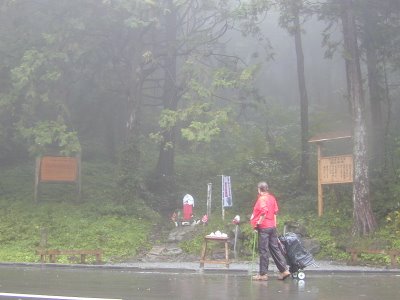
OSOREZAN IS renowned for its shamanesses, who are reputed to have the power to communicate with the dead. The first time I visited the volcanic shores of Gokurakuhama and Usoriyama lakes, I had been deeply moved by the otherworldliness of the place, which in the minds of many Japanese is a kind of River Styx—for beyond the shores of the lake, it is believed, lies the spirit world.
Fumaroles gurgled and the smell of sulphur permeated the air as I strolled around the area during what was then the shamaness festival. Colourful pinwheels blew in the breeze but a mood of mourning lingered as people prayed for those who had passed on.
I also had hoped at that time to meet with an shamaness, but the swelling crowds outside the shamanesses' tents were disheartening as were the words of one gentleman who told me that it was unlikely that the shamanesses could communicate with "gaijin spirits." "Even if you're Japanese, you can't make head nor tail of what they say," he told me. "They're speaking Nambu dialect," he explained, scratching his head in frustration as he tried to convey to me that the dialects of Aomori prefecture are about as impenetrable as Geordie is to most English people.
Etsuko was none too happy with my wanting to have a session with an itako. Hailing from Okinawa, she claims to find it all a strain and, perhaps, so would I if I came from a family where I had a telepathic uncle, an aunt who claims to regularly see and speak to ghosts, as well as a mother who's a qualified palmist.
I, meanwhile, love to dabble and have met a number of psychics and shamans in my time. "I can see you walking the stage of Broadway; your name up in bold letters on the billboards," an American psychic visiting Tokyo once told me after I simply mentioned that I love the theatre.
But the palmist I met at Wat Po Temple in Bangkok shook me some thirteen years ago when, without a clue from me, he said: "Your mother is not the woman who gave you life. You will meet your birth mother in a foreign land." Ten years ago, my birth mother flew to Japan and we were reunited for the first time since I was three months old.
It's now almost three years since my adoptive father passed away. The shamaness, Miyou Ogasawara, fingered her thick, brown beads and asked for my father's name. I trembled as I uttered, "Arthur Charles King." "Azian Chong Ching," she repeated, and Etsuko and I curled up with laughter. The old woman repeated my father's name several times but each time it made him sound like a Chinaman.
Ogasawara-san started her long chant and then the message came: "Be careful on the road as you walk south. Be careful with your health; eat well and rest. I'm sorry I could not survive the illness, but to make me happy marry and give me grandchildren." The same message she repeated several times before ending the session.
"What a load of codswallop," Etsuko scoffed afterwards. I don't truly think that the itako had communicated with my father, but how did she know about our walk?


IN GOOD SPIRITS


ALL PHOTOS BY JAPAN ON FOOT 2001/2002

AS OUR pedometers approach the 2,600-kilometre mark, we are both pleased to report that, healthwise, we are doing surprisingly well for two women who usually lead cosseted lives in Tokyo.
Apart from vicious colds—which still didn't stop either of us from walking—Etsuko and I have little to complain about. The odd twinge in our shoulders, shins or knees only seems to be expected after covering great distances on foot over mountain passes in torrential rain. But the aches and pains of the day quickly fade with a soak in an hot water spring or traditional Japanese inn bath.
Blisters, which caused me misery in the early days and plagued me during our last two hundred kilometres through Hokkaido, have disappeared since investing in a second pair of boots.
Etsuko, who's about to shell out for her fourth pair of trainers, hasn't had any feet problems since the first month's slog from Cape Soya to Nayoro.
Honshu is also proving to be far less demanding than Hokkaido, where we often had no alternative but to cover forty-five-kilometre stretches a day in order to find food and shelter for the night. Often, after twelve hours or more on the road, the only sleeping space we found would be the cold floor of a retired steam locomotive, hard benches in a bus shelter or spine-breaking plastic seats in some remote railway station.
Since arriving in Aomori prefecture, we have relaxed our walking pace and presently cover an average of twenty-six kilometres each day. As such distances place less strain on us physically we no longer need as many rest days to recover for the next haul. And, although we recently spent one night sleeping with two thousand jizo statues (guardians of deceased children) on the outskirts of Kanagi, it was more out of intrigue than desperation that we rolled out our sleeping bags in the shack that stands in the grounds of Kawakura Sai-no-Kawara Jizoson.
"Weren't you scared?" the elderly caretaker asked us incredulously the following day. "You wouldn't catch me sleeping here; this place must be haunted by all sorts of spirits," the chap gasped with eyes growing wider by the second.
Kawakura Sai-no-Kawara Jizoson is believed to be the home of the shamanesses, and since the nineteenth century the site has served as a center where people pray for the souls of children who have passed away. Founded by Jikaku Daishi, the same monk who established Entsuji temple on Osorezan, up on the Shimokita peninsula, this sacred site also possesses the aura of the netherworld.
The faces of jizo peered out at us as we strolled through the surrounding forest area. Two halls stood chockablock with thousands of dressed jizo figures of all sizes. Photographs of departed loved ones were scattered here and there, along with their old kimono, suits, shoes and other personal belongings. The shelves in one hall were bursting with glass cases of dolls dressed in bridal attire; offerings made by families at a time when they consider it appropriate for their deceased to marry.
Etsuko explained to the caretaker that, under normal circumstances, neither of us would have been able to sleep a wink in such a place. We were both simply so exhausted from the heat of the previous day's walk that, miraculously, we managed to sleep as soundly as the dead.


IT'S A DOGU'S LIFE


ALL PHOTOS BY JAPAN ON FOOT 2001/2002


ETSUKO WAS at the end of her tether with me. I had been appointed map-reader for the day, and now we were completely lost, stumbling across rice fields after having left Kanagi late in the day.
"It’s beyond me why you always have to read maps upside down. No wonder we’re lost," she screamed at me as I held the map this way and that in the hope of pinpointing where we were in relation to Kamegaoka.
Rice fields stretched on into infinity, and there seemed little hope of finding a sealed road again that day that would take us, before sunset, to the home of a mysterious prehistoric doll.
A woman, donning ninja-like headgear came pouncing after us, obviously curious about these two characters having a showdown in her paddy fields.
She eyed me suspiciously and inquired what was in our luggage trolleys. When I told the old dear that they simply held PCs, clothes and camera equipment she gave a disbelieving laugh. Could she possibly think we were dragging a sarin factory all the way through Japan? Did we look like a cult?
Our ninja pointed out endless paddies that we would need to cross to make it to Kamegaoka, which is famed for the Shakoki Dogu, a Jomon period (10,000 B.C.E. 300 B.C.E.) doll that some people say is the representation of aliens that visited early Japan.
A shroud of mystery hangs over the dogu and what the prehistoric ancestors of the Ainu used them for. Some archaeologists believe that the clay figurines were used as fertility symbols or that shaman would transfer pain, particularly that of childbirth, into the doll and then smash it. Other researchers claim that the dolls were merely toys, perhaps funerary objects or religious icons. And, then there is the batty alien theory.
But, these intricately designed clay figures, which have been found as far afield as Ecuador, are reputed to be the oldest dolls in the world.
Echigoya Koichi, 80, is the great, great grandchild of Shichitaro Echigoya, the man who found the one-legged Shakoki dogu in his paddy fields 113 years ago. "For generations we kept ningyo-san (the doll) in our safehouse," Mr. Echigoya said of the doll, dated from 1000 B.C.E. to 400 B.C.E.
"We only brought it out for the occasional visitor to see or during Festival of the Dead and New Year when we would place it on the family altar and make offerings of sake and food to it," the old chap said of the Important Cultural Property that now rests in Tokyo National Museum in Ueno Park.
Hiroumi Ichinohe, who works at the local Jomon museum, also makes a living as a potter who does a brisk business in producing replicas of Shakoki dogu, selling them for up to 150

,000 yen per piece.
"I have all sorts of people who want to buy these dolls," Mr. Ichinohe told us after taking us out to his art studio. "Some people are real fanatics, believing the dogu possess psychic powers or will help them communicate with aliens. I always make it clear that I have no special ‘energies’ to instill in these figures and that it is purely a commercial business," he shrugged.


STOPPED ON SUSPICION


PHOTOS BY JAPAN ON FOOT
2001/2002


HAVE ETSUKO and I become prime suspects of terrorism? It seems that walking has become a shady activity in Japan, especially if it involves a Japanese walking with a foreigner. Detective Toshiharu Sugimura of Gonohe Police Department said he needed to check me out as part of "terrorist preventative measures."
Etsuko and I both laughed, but we wondered if visiting the small village of Shingo could possibly be considered part of a Middle East plot. Tucked away in Aomori prefecture, Shingo, formerly known as Herai, claims not only to have pyramids older than Egypt’s and links with the Lost Tribes of Israel, but also boasts having the "Tomb of Christ."
For those not in the know, local legend here claims that Jesus never died on the cross but that his brother, Isukiri, died in his place. Apparently, Christ fled to Japan and lived up to the ripe old age of 106 in Shingo village. And, if you don’t believe it, Shingo has the tomb on show for all to see.
The Juraizuka tomb claims to hold the body of Christ, while the Judaibo tomb, which is reputed to be his brother’s, is believed to hold hairlocks of the Virgin Mary as well as an ear of Isukiri.
Detective Sugimura observed me carefully and then whispered, "As you know, there has been the attack on the World Trade Centre in New York. President (George) Bush is also planning to visit Japan.
"We have to check out all foreigners living in Japan," he continued. "We need to check Japanese too if they raise suspicions. A Japanese walking with a foreigner stands out, especially in this part of Japan." The detective eyed Etsuko, adding that he had seen us walking twice so far on the roads of Aomori prefecture.
Why would Detective Sugimura find us dodgy? I wondered. We had recently been in Misawa, where there so happens to be both a U.S. and Japanese military base. In nearby Rokkasho there is also a nuclear waste facility. Perhaps that was considered odd.
Or had Gonohe Police Department already done its homework on us and discovered that in Hokkaido we visited two Self Defence Forces bases, including the radar base on Okushiri island where we had enjoyed lunch with Chief Commander Mitsuzaburo Saguchi? Had that made antennae twitch?
Detective Sugimura made a huge blunder: "Shimabukuro-san, I will need your address and a telephone contact number too so that you can also be checked out." Etsuko wasted no time in telling him bluntly, "As a Japanese, I have a perfect right to walk in my own country. And, I don’t give my number and address to strange men." She then proceeded to tear a strip off the man.
"So, what you are saying is that Japanese can’t have foreign friends; that to do so is strange and raises police suspicions?" Detective Sugimura gave a slight nod. I wondered if perhaps this wasn’t already some Kafkaesque trial: Guilty by association.
Detective Sugimura leaned back in his chair and bit his lip. "You’re both likely to be stopped and questioned further," he said. "All the way down to Okinawa," he emphasized, shaking his head in disbelief at what is our walk’s destination goal.
The following day we left Shingo village. Within minutes of crossing into Iwate prefecture, two police cars crawled passed us on the road.


WALKING BY FOOT


PHOTOS BY JAPAN ON FOOT 2001/2002


MOST PEOPLE Etsuko and I meet while on the road cannot grasp that we are truly walking through Japan. One fellow in Kindaichi, to whom we explained our zigzag route from Hokkaido’s Cape Soya through to Iwate prefecture, still concluded the conversation by saying, "But you are walking by bullet train, aren't you?"
Often we are baffled by people inquiring if we are "walking by car," "walking by motorcycle" or "walking by bicycle."
We have discovered that the Japanese word for walking, "aruku," is synonymous with simply traveling, and it has left us wondering if even Japan's famed geographer Ino Tadataka, who is credited with walking more than 43,700 kilometres around this country some two hundred years ago, actually truly walked the whole distance. Could it be possible that while drawing his maps of Japan, Tadataka covered some of his seventeen-year journey either "walking by horse," "walking by palanquin" or "walking by boat"?
We were also rather startled by an incident that happened at Apple Hot Spring on the outskirts of Asahi town in Yamagata prefecture. We had just spent a leisurely hour melting away the aches and pains of the morning in a bath full of whopping red apples and were ready to hit the road again when a podgy, middle-aged chap waddled up to us, blew cigarette smoke in my face and asked, "So, where have you walked from? Yamagata city?"
His face turned purple with rage when I told him that we had walked from Hokkaido. "Impossible)!" he spat. "Baka na gaijin (Daft foreigner)," he screamed, "Baka na onna (Stupid woman)," he raved, promptly turning on his heels and stomping off in a huff. Etsuko and I both laughed but we now realize that some people think we're making fun of them when we say we've walked all the way from Japan's northern reaches. If in Yamagata-ken, the locals think we are pulling their legs, then what responses will we encounter once we recount our ventures to people in Kyushu and Okinawa?
Certainly, every day is an education on the road, but we also learn a lot about the Japanese when we bathe. The Japanese often think of themselves as shy and reserved. We both disagree, and it doesn't necessarily take copious cups of sake for the Japanese to let rip. When you're stripped down to your birthday suit, obachan see this as a green light to get up to a bit of mischief.
With a lecherous squeal of delight, the roly-poly grandma grabbed hold of my left breast and gave it an almighty squeeze. "Yah, it's like a bean paste bun," she whooped with toothless glee as I--purely from embarrassment--turned the shade of boiled octopus.
A hunch-backed granny with boobs that drooped to her kneecaps tottered into the onsen bath to add to the commotion. "Yah, bijin da (It's a beautiful woman)," the old dear drooled, stroking my lily-white shoulders as I prepared to defend myself in the event that she, or any other obachan, decided to take another lunge for my "bean paste buns"--or anything else for that matter.
The "groping granny" will remain an unforgettable bathing experience, having taken place on our last evening in Akita prefecture, a region renowned for its bijin, as well as its hot spring baths.


THE BLOB


PHOTOS BY JAPAN ON FOOT 2001/2002


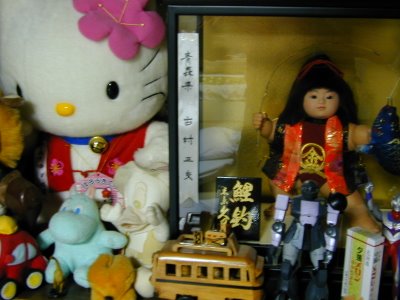
IS THE white circle floating above my right shoulder a ghostly apparition? Etsuko and I had taken more than 50 photographs in the "haunted room" at Ryokufuso guesthouse in Kindaichi, Iwate prefecture, yet it was only the last shot of the evening that showed what Sakakida Michiko purports is an orbis--or the paranormal presence of a little boy who died here 660 years ago.
Mrs. Sakakida was celebrating her thirtieth wedding anniversary at the traditional Japanese inn with two friends, Mrs. Saikawa Sekiko and Mr. Komura Masao, who also claim to have had various experiences with the zashiki warashi (fire hearth spirit).
"It was on my first wedding anniversary that I first encountered the spirit of Kamemaro in this room," Mrs. Sakakida told Etsuko and I as we listened to the experiences of the woman, who since that time has slept more than fifty times in the room that overflows with cuddly toys, where he is said to regularly appear to guests.
The middle-aged woman told us that over the years she has seen Japanese wooden sandals fly across the room and regularly hears toy birds that are sensitive to vibration suddenly start twittering in the night. Mrs. Sakakida also claims to be able to see the spirit of Kamemaro in his various forms and is, apparently, even visited by the zashiki warashi at her home in neighbouring Aomori prefecture.
"He often appears as bubble-like formations. I also see his face in what are dream-like states, and he asks me to play with him or bring him toys," she told us while Mrs. Saikawa pulled out photographs of her daughter and a friend who had recently stayed in the room. Two pictures clearly showed large white blobs hovering over the face of her daughter, while one showed an eerie white outline lingering in the corner of the photograph.
"If Kamemaro appears to you, your wishes will come true. It is believed that men will progress in business and that women will find a rich husband," Mrs. Saikawa said of the spirit of the boy, who was born into Kyoto's aristocratic Fujiwara clan. Relations smuggled him up to the Tohoku region after members of his family were slain by a rival clan during the Nambokucho period (1337-1392). It is said that the six-year-old Kamemaro was plotting revenge before his life was cut short by an illness.
"Kamemaro died before he had the chance to seek revenge," Mrs. Sakakida told us. "He had many aspirations that he couldn't realize in his own life and that's why he now grants the wishes of those he appears to," explained Sakakida.
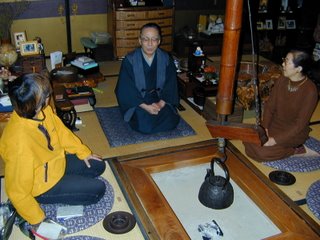
Mr. Kazuhiko Itsukaichi , 65, is the owner of the house that was originally built in the fourteenth century yet he has never slept in the zashiki warashi that is booked by guests months--even years--ahead of time. "It is forbidden for any of our family to sleep there. When I was a boy, it was the guests' quarters," he told us. "But many people who sleep in the room have experiences with Kamemaro and later return to tell me that their wishes did, indeed, come true," he said as we all sat around the fire hearth in his living room that is adorned with antiques, and is where you can also see the small Shinto shrine that is dedicated to his ancestor, Kamemaro.


TROUBLE ON ROUTE 112


PHOTOS BY JAPAN ON FOOT 2001/2002

WE ARE both appalled by the general attitude of Japanese drivers. It seems to be: "We own the road and you’re just in our way." Japan’s police force also seems indifferent to the plight of pedestrians, so should the patrolmen with the Ministry of Land, Infrastructure and Transport (MOLIT), or even construction workers be any more sympathetic?
The MOLIT patrolmen had stopped us on the road, shortly after we headed out of Tsuruoka city in Yamagata prefecture. After reading about our venture in a local newspaper, the two men delighted us by presenting us with a map of the prefecture, as well as a radio-torch and a letter bidding us well on our walk.
But, Etsuko and I are not sure how truly honourable their intentions were. The letter they handed us also informed us that due to construction works we should not pass through the tunnels on Route 112. The letter instructed us to walk over a mountain road that happens to be a notorious nest of tsuki no waguma (Japanese brown bear).
"Please be careful," the chubby, helmeted chap warned. "That mountain road is quite dangerous," he said before hopping back into his jeep.
But, before we had even reached the tunnel, Etsuko and I were told that the mountain road would be inaccessible that day. "There’s been a huge landslide," an old fellow on a bicycle informed us. "There’s no way you can cross the mountain road," he said.
The construction chappie standing at the mouth of the tunnel, however, would hear nothing of it. "This tunnel is for cars only. Pedestrians aren’t allowed to walk through," he fibbed while waving his throbbing-red baton under our noses. "You have to go over the mountain. It’s safer," he insisted.
"How can walking over a bear-infested mountain with huge landslides be safer?" I challenged him. "If you are so concerned about our safety then stop the traffic for a few minutes while we pass through, or just let us walk within the construction workers safety cones," I pleaded. Etsuko, meanwhile, charged on ahead and disappeared inside the bowels of the tunnel.
Tunnels have been one of our worst nightmares during this walk. We feel like pieces of chewed-up meat passing through the rancid, turbulent innards of some huge, snoring beast. While trudging through the vacuum, we choke on exhaust fumes that also burn our eyes, and the amplified sounds of traffic only add to our terror.
Poorly lit and rarely paved for walkers, Japan’s tunnels are usually littered with old construction tools, bits of wiring and shards of glass. Other obstacles include bento boxes, drink cans and bottles that motorists see fit to toss from their windows.
Tunnels also seem to be a popular place for dumping pornography. Video cases showing bare bottoms and breasts lie here and there, and it hasn’t been unknown for us to get our trolley wheels tangled around a stray pair of panties or stumble over a bra.
More common are oil slicks, mud and rubble that send us sliding and tripping, or cause our trolleys to lose balance as we teeter along the narrow sidewalks of endless tunnels. Often, we are left with nothing more secure than a grimy, black tunnel wall to cling to or fall against when the pressure of huge trucks hurtling passed nigh on blows us off our feet.
But, after all the fuss made over passing through the tunnels on Route 112, they turned out to be the safest and easiest tunnels that we have walked through so far on our trek.


ABSOLUTELY LACQUERED


PHOTOS BY JAPAN ON FOOT 2001/2002

IT WASN'T so much the case that there was "no room at the inn," it was more like nobody was interested in doing business. "I’m sorry," the ruffle-haired, middle-aged woman said, "but we had a party at the weekend so we’re too exhausted to have people staying here for the next day or so. You’d better go down into the valley."
We wearily trudged back down the steep mountain road to the Kayabukiya rest house that lies nestled in Tamugimata, Asahi village, in Yamagata prefecture. We had already gone looking for accommodation there, but the inn owner’s mother was another who didn’t want to take in guests that day. "It was a hectic weekend for us, and usually this time of year we start slowing down round here," Mr. Kazushi Shibuya had told us. "But, if you have no luck finding a place, do come back," he stressed, "as there’s nothing else apart from the lodge up on the main road."
In the midst of autumn the surrounding mountains of Tamugimata were a blaze of russet and golden hues. Etsuko and I were glad we ended up staying in the hamlet as apart from enjoying the rustic atmosphere of eating our stews and mountain vegetable dishes around an fire hearth in the thatch-roofed inn, we got to hear some fascinating tales during the two days we spent there.
The most staggering story we heard was that, in a nearby temple visitors can view the skeletal form of a local man who turned himself into a mummy. "You'll need to head back north up the road again to see it," Mr. Shibuya explained and so we walked back in the direction of Yudono-san, one of the sacred mountains of Dewa Sanzan.
Once at Dainichi-bo temple, we discovered that the monks bristle if you refer to Daijuku Bosatsu Shinnyokai Shonin as a mummy. "This is a living Buddha," emphasized Jinichi Honma, one of the monks, as we looked on in awe at the skeletal form of the monk who starved himself to death on a diet of nuts, seeds and water.
From his twenties, Daijuku Bosatsu Shinnyokai Shonin had striven for enlightenment, aspiring to become a living Buddha and, in 1783, after seventy years of religious austerities, he had himself committed alive to the earth. From his underground vault, the monk continued his devotions and consumed nothing more than lacquer that was fed down to him through a thin pipe. The lacquer served to mummify the monk from the inside out.
Dressed in red and golden robes and donning a tall pointed hat, the living Buddha slumps forward in a glass case on an altar in the temple that was founded in 807 by the renowned Buddhist monk, Kobo Daishi. Also, on this mountain that was once referred to as the "unspeakable mountain" because a commandment forbade anyone discussing the sanctity of the place, there is Churen-ji temple that also boasts having a living Buddha.
"Their living Buddha is not in such good condition as ours," Mr. Honma told us, adding, "It was not an uncommon practice in the olden days for monks to starve themselves to death in pursuit of enlightenment." I could feel my stomach rumbling from the need to eat lunch, and resigning myself to the fact that probably I will never escape this world of samsara, Etsuko and I left Dainichi-bo in search of a place where we could wolf down a bowl of steaming hot noodles.


MOSES WAS HERE


PHOTOS BY JAPAN ON FOOT 2001/2002


OSHIMIZU TOWN in Ishikawa prefecture holds two great stakes in its claim to fame: it is the hometown of the world’s first clone cows, and the place where Moses is said to be buried. Local legend claims the Biblical prophet flew into Japan by spaceship and lived to the ripe old age of 583 on Hodatsu mountain.
With its jigsaw of paddies and fields of daikon and cabbages, Oshimizu is really no different from Shingo-mura (village) in Aomori-ken, where Etsuko and I had previously seen the two crosses that mark the reputed tombs of Christ and his brother, Isukiri.
But, while Shingo may have tentative links with Japan’s Hidden Christians—who took their religion underground after it was banned by the Tokugawa shogunate (1603~1867)—Oshimizu, we were told by the farmer on whose land "Moses’ tomb" lies, has no history of persecuted Christians.
Etsuko and I bumped into Mr. Hiroshi Koshino just as he was rushing out in muddy wellies to tend to his fields. He filled us in on Mitsukozuka burial mound, the reputed tomb of the Old Testament prophet that is situated in what is called Moses Park.
"I’m not sure if I’m related to Moses," he told me earnestly, "but when I was a small child, my father was visited by a historian who handed over documents proving that the ancient burial mound on our ancestral land is where Moses was buried.
"I believe that Moses lies there," he added without hesitation. "And the surrounding burial mounds hold the remains of members of Moses’ family."
Even when compared to the story of the Exodus, in which God parts the Red Sea to help the Israelites escape slavery in Egypt, the story of Moses flying out of the Sinai wilderness to Japan seems too hard to swallow. Or is it?
Pulling out several books—each easily as thick as the Bible—Mr. Koshino started flipping excitedly through the pages of the "Takenouchi Documents," the originals of which were found in a cave in Ibaraki prefecture, a little north of Tokyo, in 1935. The documents were said to reveal that both Christ and Moses lived and died in Japan but, unsurprisingly, the scrolls that were scribed in Japanese have since been proved fake.
Koshino, however, was not to be deterred. Stabbing a finger at the chapter that states Moses flew to Japan by amasoraukifune (heavenly flying ship), Mr. Koshino said, "You see, it says right here. And I’m not the only one who believes it. Apart from the many Japanese Christians who visit Moses’ tomb each year, we also have had large groups of American and Italian Christians pay their respects at the tomb."
Mr. Koshino has visited Shingo village—home of what some say is Christ’s tomb—on a number of occasions, but he holds no Christian beliefs.
"I’m a Buddhist," he laughed, "I don’t know anything about Christianity or Judaism," he told me.
So why would Moses and Jesus have ever come to Japan? I asked him. The elderly man observed me like I was a complete and utter nincompoop.
"It’s obvious," he announced, "Because Japan was the world’s first civilization. All great learning came from Japan and spread throughout the world." Mr. Koshino had another piece of information to share with us.
"The Ten Commandments were given to Moses by the emperor of Japan and their wisdom spread throughout the world. But the stones on which these laws were scribed still rest in this country," he said.
Feeling like I had stepped out on a trail hotter than even the one for the Holy Grail, I ventured to ask where Japan’s Ten Commandments could be found.
"They’re in a temple in Ibaraki prefecture," the farmer told us before heading off to his fields.
Etsuko and I strolled out past the paddies, through forests of towering pines and thickets of bamboo before reaching Mitsukozuka tomb. Clambering to the top of the ancient burial mound, we found a small altar adorned with flowers, some offerings of fruit and soft drinks, as well as incense. In a wooden box, a small, pink rosary lies waiting for those who wish to kneel down here in prayer.

MARY, QUITE CONTRARY


PHOTOS BY JAPAN ON FOOT 2001/2002

I'M THINKING of getting a sex change. Etsuko and I had dropped by a scruffy restaurant for lunch in Kaga, Ishikawa prefecture, and had barely taken our place on the tatami-mat floor when a middle-aged woman nudged her friend and in a loud voice said, "Do you reckon that foreigner is a woman or a man?" Having toddled out the ladies' loo in a hotel the night before and had an old dear go ballistic on me, screaming, "This is not the men's toilet," I felt frazzled by a nation of people who live with the myth of their own politeness. I couldn't believe the chutzpah of the woman in the restaurant asking her friend's opinion on my gender. She was much butcher than many gay women I've met. "Watakushi wa onna desu (I'm a woman)," I called out cheerily to the woman, but she didn't flinch. So, I switched to bitch-mode: "Anata wa dansei desu ka? (Are you a man?)," I asked, as the woman's predilection for scratching her crotch in between poking around dentures with a toothpick was not exactly what "polite society" might call "lady-like" behaviour. The woman looked blank. Perhaps she truly had the hide of an elephant, I pondered, but it turned out that she couldn't quite believe that a foreigner was speaking Japanese. The owner of the restaurant, however, immediately picked up my prickly vibes and came scurrying over to mollify me. "Oh, sister, you are so pretty. Isn't she pretty everyone?" she addressed the whole restaurant, wringing her hands under my nose and squirming in agony at the "Wa (peace)" of the place having been shattered. I was touched by her concern but also humored by her efforts to convince me that I am, indeed, female. Etsuko bowed and apologized to everyone for the sad fact that I had ever come to attain a grasp of even one syllable of Japanese. I only hoped that toothpicker and friend had learned a lesson: when talking about anyone—even a gaijin—it is probably wise to do so in hushed tones. Toothpicker and chum joined the restaurant owner's aria of how pretty I was, stressing that like singer celebrity Akiko Wada, it is my height that makes my gender so questionable. Tears poured down my face in mirth, rolling into my sake and stew pot. We were accosted by a herd of yellow-hatted primary schoolchildren as soon as we stepped out of the restaurant. "She's Chinese," a chubby boy pointed my way. "Ooh, it's a gaijin-san," a little girl cooed as if she had just spotted something as cute as Pikachu on the road. "You're an American," butted in a serious-looking girl. "I think she's French," added what had to be the classroom swot. I told them I was from London and was surprised that the city rang a bell. The serious-looking girl broke into song: "Rondon bridge is farring down, farring down, farring down," she screeched and her classmates joined in. "It's Santa," a chubby girl stroked my red jacket. "So what's in your bag?" the skinny girl pushed forward to take a closer look at my trolley. "I'm Santa and this bag is full of presents," I told them, not realizing that I would regret pulling the legs of Japanese children. An umbrella came crashing down on my head. The skinny girl lashed out with fervor, repeated blows raining down on me as I tried to outrun her. "Sukebee oji-chan (You're a dirty old man)," she screamed at me, and I wasn't sure whether I was more hurt by the pummels of her brolly or by the fact that even to a Japanese schoolgirl I look like a man.


THE COMFORT OF FISH


PHOTOS BY JAPAN ON FOOT 2001/2002


WE'VE HEARD some pretty wild stories since first hitting the road in May, last year, but one of the fishiest tales yet is that of a reputed mermaid. On the outskirts of Hashimoto City in Wakayama prefecture, we found Karukayado temple, which is dedicated to Ishidomaru and his parents. It was the boy's mother, Chisato, who once owned the "mermaid" mummy that now takes pride of place in a lacquer chest in the temple's main altar room. Chisato, apparently, was also a bit of a wanderer. Travelling all around Japan during the Heian period (794-1185), the high-class entertainer had carried the "mermaid" mummy as a talisman to protect her against evil. She died in 1165 and one of her tombs is situated in the grounds of this temple, which once served as the entrance to the sacred mountain of Koyasan. The mummy of the reputed mermaid, meanwhile, rests in its chest at the foot of a statue of Chisato. Mr. Sofu Iwahashi, a Buddhist scholar and chairman of the Karukayado Temple Preservation Society, laid the wooden box that holds the skeletal remains of the "mermaid" on a table for us to view. Horror overwhelmed us as we peered at the mummy that is said to be at least 1,400 years old. From its head to the tip of its tail, the "mermaid" measures sixty-five centimetres long, and weighs about three-hundred grams. Fine strands of hair still remain around the ears. Most of its facial features--ears, nose and eyes--appear human, as does its delicate arms and hands, the latter of which still show traces of tiny nails on the fingers. The "mermaid's" torso is also very much human, revealing sagging breasts and nipples. Although Iwahashi informed us that not all mermaids in Japan were female, this one most definitely was. However, all human likeness ended just below the "mermaid's" waist, from where a scaly fish tail began. Feelings of pity and loathing welled up inside of me as I scrutinized the creature. The "mermaid's" petite hands stretched upward, turning in towards the face in a gesture of acute pain and anguish while its fishlike mouth, from which sharp fangs protruded, was set in a traumatic wail. "She takes away the pain of all who look at her; that's why she looks so anguished," explained Mr. Iwahashi, who believes that the spirit of the "mermaid" is very much alive. The seventy-two-year-old is adamant that mermaids once existed, and maintains that they inhabited the waters of Japan up until around the seventeenth century. I asked Mr. Iwahashi why he didn't think that the "mermaid" mummy was the result of some bizarre experimental operation; perhaps the surgical joining of a monkey and fish. The old chap denied the possibility, telling us that a surgeon in Osaka has conducted tests on the "mermaid" and established that the top half of the mummy is definitely human and the bottom half that of a fish. "There is nothing to show that two different creatures have been joined together," he told us. I ventured to ask Mr. Iwahashi how he thought mermaids ever came to exist in the first place. "Well, it's quite obvious," the old fellow said matter-of-factly. "Fishermen and sailors used to make love with fish. They were bored, lonely and frustrated and would put fish down their trousers to comfort themselves," he said. Etsuko and I curled up with laughter but had to agree that it was perhaps the most feasible answer, albeit a rather extraordinary one. Mr. Iwahashi disagreed with us: "You mean to say, you've never heard of fishermen putting fish down their trousers to satisfy themselves?" We had to admit to leading sheltered lives. Mr. Iwahashi was flabbergasted by our ignorance. "Well, fishermen all over the world used to do it and many, I dare say, continue to do so to this day. That's why occasionally you still hear reports of sightings of mermaids somewhere out at sea," he concluded.

READ PART 6: OKINAWA

READ PART 5: KYUSHU

READ PART 3: SHIKOKU

READ PART 1: FIRST STEPS FROM HOKKAIDO


Thursday, April 20, 2006

Japan on Foot Charity Events

北海道から読めましょう

READ BLOG FROM HOKKAIDO


過去に行われたチャリティーイベント


2001年3月24日(土)1:30pm? IWIC ミーティング
東京、原宿の「ピンク・カウ」カフェにて、IWIC (International Women in Communication)の会合が開かれました。IWICは、外国人・日本人のメディア関係に勤める主に女性のジャーナリスト達の集まりです。「日本の現状?ドメスティク・バイオレンス」とテーマに参議院議員「参議院議員社会共生調査会プロジェクト」(民主党)の小宮山洋子さん、「HELP」ディレクター大津さんがお話しされました。また、日本徒歩体験プロジェクトチームよりメアリー・キングと島袋悦子プロジェクトの目的について話しました。


小宮山議員のホームページ:


HELP シェルター 事務所: 03-3368-8855
ミーティングの様子: 小宮山洋子参議院議員(中央)、メアリー・キング(右端)


4月22日(日)
東京、原宿の「ピンク・カウ」カフェにて、日本徒歩体験プロジェクトの開始を祝うチャリティーパーティーが開かれました。多くの方々から、支援物資、支援金、支援する心などを頂きました。すべては、HELPシェルターへ寄付されました。ご協力ありがとうごさいました。


4月29日(日)
東京、高田馬場にある英国パブ「フィドラー」にて、チャリティーコンサートが開かれました。ヘレン・ノースイーストバンド、ボトルネックブルース、グレン・テリーがチャリティ支援の為に演奏してくださいました。ミュージシャンの皆さんありがとう。コンサートにきてくださった方から、紙オムツ、トイレットペ^?パー、クッキングオイル、支援金などを寄付してくださいました。すべては、ヘルプシェルターへ送られました。ご協力ありがとうございます。

Media Coverage During JOF walk

READ BLOG FROM HOKKAIDO


ALL PHOTOS BY JAPAN ON FOOT 2001/2002


メディア関連


私達の旅は以下のメディアでも報道されています。


Stourbridge News 英国の新聞 08 Mar 2001
This is the Black Country 英国の新聞 15 Mar 2001
The Japan Times ジャパンタイムズ 25 Mar 2001
北海道新聞 2001年 5月10日
北海道新聞 (根室・釧路版) 2001年 6月21日
コスモポリタン 日本版 2001年 9月号
 (青森県) 2001年 9月11日
デーリー東北 (青森、岩手県・南部地方) 2001年 9月26日
秋田さきがけ (秋田県) 2001年10月13日
山形新聞 (山形県) 2001年10月30日
北日本新聞 (富山県) 2001年12月1日
福井新聞 (福井県) 2001年12月22日
中日新聞 (滋賀県版) 2001年12月25日
和歌山新報 (和歌山県) 2002年 1月13日
徳島新聞 (徳島県) 2002年 1月15日
高知新聞 (高知県) 2002年 2月 7日
愛媛新聞 (愛媛県) 2002年 2月18日
四国新聞 (香川県) 2002年 3月15日
日本海新聞 (鳥取県) 2002年 4月 8日
山陰中央新報 (島根県) 2002年 4月23日
中国新聞 (島根版) 2002年 4月25日
山口新聞 (山口県) 2002年 5月11日
長崎新聞 (長崎県) 2002年 5月30日
The Japan Times 2002年 6月 9日
熊本日日新聞 夕刊 (熊本県) 2002年 6月20日
熊本県民テレビ、テレビタミン 2002年 6月21日
宮崎日日新聞 (宮崎県) 2002年 7月 4日
南日本新聞 (鹿児島県) 2002年 7月13日
沖縄タイムス (沖縄県) 2002年 7月31日
Stourbridge News (U.K.) 2002年 8月29日
HoldtheFrontPage.co.uk (U.K) 2002年 9月 4日
NHK国際ラジオ放送、ウイークエンドスクウェア 2002年12月 1日
UK Press Gazette 2003
年 6月
BBC 2003年 5月


他に、旅の日記は、以下の出版物でも読めます。

Look Japan: 月1回、Look Japan のウェブページ http://web.archive.org/web/20040423080500/www.lookjapan.com/LBsc/Japanonfoot2.htm
でも読めます。

HELP Shelter is Our Chosen Charity

北海道から読めましょう

READ FROM HOKKAIDO


ALL PHOTOS BY JAPAN ON FOOT


Japan on Foot 日本徒歩体験ってなに?


2001年5月9日、2人の女性(日本人と英国人)が1年半にわたる日本徒歩体験の第一歩を踏み出しました。「日本徒歩体験」(英語名 Japan on Foot)と名付けられたこのプロジェクトは、日本最北の宗谷岬から南西端の沖縄与那国島までを歩いて日本を体験するというものです。日本徒歩体験プロジェクトは速さを競うレースではありません。最短のルートを選ばず日本をジグザグに歩きます。全国47都道府県を訪ねることができればという理由からです。日本徒歩体験プロジェクトの期間中、「ジャパン2001」という英国各地で日本文化を紹介する行事が来年3月まで開かれます


目的

目的は二つあります。ひとつは、変わりつつある日本を歩いて体験しよう。もう急ぐのはやめてスローダウンしよう。経済性、効率性のもとに忘れられた日本のいいところをみつける旅です。もうひとつは、私達のプロジェクトを通して、社会問題となっている児童虐待、家庭内暴力に対する認識を広め、「HELP」(tel:03-3368-8855)というチャリティーへの支援を呼びかけます。「HELP」は、家庭内暴力で苦しんでいる女性・子供へのシェルター(避難所)、カウンセリング及び社会復帰を支援する民間のボランティア団体です。

私たちの旅が、「暴力」について少しでも考えるきっかけになればと思っています。

日本徒歩体験プロジェクトの期間中、さまざまな雑誌、新聞、ウェブページなどへ記事を寄稿しながら全国を歩き、最終的には本を出版する予定です。


「HELP」シェルター事務所および相談:

TEL:03-3368-8855


「HELP」シェルターへの寄付:

郵便振替: 00110-5-188775
受取人: 矯風会女性の家HELP
(ローマ字名:Kyofukai Josei no ie HELP)


HELP


(House in Emergency of Love and Peace)
愛と平和の駆け込み寺


FOUNDED in 1986 by the Kyofukai, the Japan Christian Women’s Organisation, HELP provides a refuge for women and children—both Japanese and foreign—who are victims of domestic violence or abuse. HELP also runs a hotline counselling service in Japanese, Thai, Tagalog, English and Spanish.


Based in Tokyo, the HELP shelter is one of only about fifty private shelters nationwide and it can accommodate approximately fifteen women and children. Philippine, Thai, Colombian and Japanese women make up the majority staying at the shelter, but HELP assists women of many nationalities.


The shelter is funded mainly by donations, grants and the work of volunteers. In Japan, donations can be made to “Kyofukai Josei no ie HELP” by postal transfer to account number 00110-5-188775. For more information on HELP, please call HELP +81-(0)3-3368-8855.


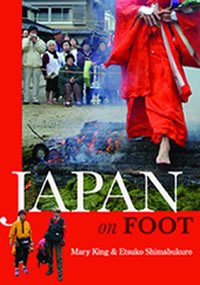
Some of the profits from the Japan on Foot book will be donated to HELP.


HELPは、ドメスティックバイオレンスの被害者の女性と子供たち(国籍を問わず)のためのシェルターとして、1986年、「日本キリスト教婦人矯風会」により創設されました。HELPは、日本語、英語、タイ語、タガログ語、スペイン語で対応できるホットラインの電話窓口を用意してあります。


HELPは、東京を拠点に全国でも50ほどしかない数少ない民間の運営によるシェルターの一つです。シェルターは約15人宿泊でき、利用者の多くはフィリピン、タイ、コロンビア、日本などです。運営は、善意の方々からの寄付、助成金、ボランティアの方々によって支えられています。HELPの活動にご賛同頂ける方々からの寄付は、郵便振込みで受け付けております。 

HELPに関するお問い合わせは、直接HELP +81-(0)3-3368-8855 までご連絡お願い申し上げます。
名義:矯風会女性の家ヘルプ 

郵便振替口座 00110-5-188775
微力ながらJapan
on Footの本の収益の一部もHELPに還元させて頂きます。


Route from Cape Soya to Yonaguni Island (Mu)

FOR MAPS & BRIEF OUTLINE OF ROUTE IN ENGLISH SEE HERE

北海道から読めましょう

READ BLOG FROM HOKKAIDO


ALL PHOTOS BY JAPAN ON FOOT 2001/2002

フォト日記
- ついに 与那国島に到着! ー
      

2002年7月21日?2002年8月15日 現在までの徒歩距離 7、494km

鹿児島港?フェリー?>屋久島(縄文杉登山)?>鹿児島港?フェリー?>沖縄・本部港ー>名護ー>恩納ー>嘉手納ー>那覇・首里ー>那覇新港?フェリー?>宮古島?>石垣島?>波照間島?>石垣島?>竹富島?>石垣島?>与那国島・久部良港ー>祖納

鹿児島港から、24時間ほどで沖縄の本部港に到着。那覇までゆっくりと4日かけて歩いた。小さな島では、早く歩きすぎないほうがいい。

いつに間にか、あっけなくゴールの与那国島についてしまった。

全国のみなさん、応援ありがとうございました。

また、普通の生活にもどります。


九州
2002年7月17日(宮崎・日南、鹿児島・志布志、鹿屋、知覧、鹿児島市)
2002年7月3日(熊本・天草、熊本市、奥阿蘇、宮崎・高千穂、西都、宮崎市)
2002年6月13日(佐賀・唐津、肥前、長崎・鷹島、平戸、外海、佐世保、長崎)
2002年5月23日(関門トンネル、福岡・北九州、岡垣、新宮、博多)

中国

2002年5月11日(島根県・津和野、山口県・山口、防府、小郡、山陽、下関)
2002年4月30日(島根県・温泉津、江津、浜田、三隅、益田)
2002年4月23日(鳥取・米子、島根・美保関、隠岐、松江、宍道湖、平田、出雲大社、湖陵、大田)
2002年4月7日(岡山、総社、高梁、成羽、新見、鳥取・日野・根雨、溝口、米子)

四国

2002年3月25日(広島・福山、香川・多度津、宇多津、高松、塩江、長尾、屋島)
2002年3月10日(愛媛・松山、菊間、しまなみ海道、広島・因島、尾道)
2002年2月27日(愛媛・宇和島、宇和、大洲、中山、松山)
2002年2月18日(高知、中土佐、窪川、大正、西土佐、愛媛・宇和島)
2002年2月10日(徳島・神山、阿南、海部、宍喰、高知・室戸、半奈利、夜須)
2002年1月23日(徳島・上板、脇町、三加茂、貞光)
2002年1月16日(徳島・徳島市、鳴門市)

甲信越、北陸、近畿

2002年1月7日(奈良・橿原、和歌山・橋本、粉河、和歌山市)
2001年12月28日(石川・小松、福井県、滋賀県、三重県、奈良・大宇陀)
2001年12月10日(富山・新湊、氷見、石川・羽咋、押水、内灘、金沢)
2001年12月2日(新潟・西山、能生、富山・朝日町、魚津、滑川)

東北

2001年11月19日(山形県・小国、県境、新潟県・佐渡)
2001年11月6日(山形・田麦俣、月山山麓、大江、白鷹、南陽)
2001年10月30日(山形・真室川、最上川、羽黒山、鶴岡)
2001年10月17日(秋田・大館、鷹巣、阿仁町、角館)
2001年10月6日(青森・六戸、新郷村、岩手・金田一温泉、浄法寺、秋田・花輪)
2001年9月22日(青森・津軽地方、八甲田山、十和田湖、三沢)
2001年9月10日(本州最北端・大間崎、下北半島、恐山、中里)

北海道
2001年8月30日(奥尻島、江差、湯ノ岱、木古内、上磯、函館)
2001年8月9日(登別温泉、昭和新山、洞爺湖温泉、有珠山新火口)
2001年8月4日(コース外、札幌取材特別編)
2001年7月28日(二風谷、鵡川、沼ノ端)
2001年7月18日(上士幌、大雪山国立公園、日高)
2001年7月6日 (阿寒湖、足寄)
2001年6月29日(知床半島、摩周湖、屈斜路湖)
2001年6月4日 (サロマ湖、網走)
2001年5月30日(名寄、下川、西興部、興部、紋別)
2001年5月25日(稚内、豊富、幌延、中川、音威子府、美深温泉、名寄)
2001年5月14日(礼文島、利尻島)
2001年5月9日(宗谷岬、いよいよ出発)

Kings of the Road


ALL PHOTOS BY JAPAN ON FOOT 2001/2002

Thursday 03/13/2003 3:45:45pm

Name: Jill Tolley

City/Country: England

Comments: Hi Mary,
Just accessed your web page and cannot quite believe what you and your friend have done - it is certainly an impressive achievement - all this by a girl from Quarry bank - fantastic. Keep up the good work as certainly the charity is a very worthy cause. I saw the message from karen Caldwell - as she says 30 + years have passed and from your picture you hav`nt changed one bit!! Wish we could all say the same!

Love, Jill

--------------------------------------------------------------------------------


ALL PHOTOS BY JAPAN ON FOOT 2001/2002


Monday 09/09/2002 8:53:16am

Name: karen caldwell (nee moore)

City/Country: west midlands/uk

Comments: Hi Mary, remember me? Of course you do!I would just like to congratulate you and Etsuko on your fantastic achievement for such a worthwhile cause. We haven`t seen each other for a few years now but I often think of you, where you are and what you are doing! Our friendship goes back nearly thirty years ( a long time!!) and can I say I wasn`t at all suprised to read your story in our local press. (you never did suprise me Mary!! I hope to see you when you are next in the UK until then take care. Love Karen.

--------------------------------------------------------------------------------


ALL PHOTOS BY JAPAN ON FOOT 2001/2002


Monday 08/26/2002 5:52:59am

Name: Kazuki

City/Country: Durham, UK

Comments: Congratulations on your great achievement!! It is absolutely fantastic! I've been really enjoying watching your exciting trip through internet. Thank you!

--------------------------------------------------------------------------------


ALL PHOTOS BY JAPAN ON FOOT 2001/2002


Monday 06/10/2002 11:19:41pm

Name: Ben

City/Country: Sydney, Australia

Comments: Found your website through the Japan Times. Amazing stories! Really enjoyed reading about all the interesting things you've done, and people you've met. Hope you both are travelling well, that drivers are not distracted by the World Cup, and that you can raise lotsa money for HELP.

Best Wishes,
Ben.
--------------------------------------------------------------------------------


ALL PHOTOS BY JAPAN ON FOOT 2001/2002


Thursday 05/16/2002 12:51:29am

Name: Kazuki_Bueno

City/Country: U.K.

Comments: I've got a suprising news!
As you probably know, the Queen's Golden Jubilee has been celebrated in UK, and Queen Elizabeth visited in the north east England. She also visited Durham, where I live, last Wednesday. Unfortunately, I was not able to go and see her as I had to work all day. However, my wife, Hiromi went to see her with a flower bouquette and a Japanese post card. After standing alongside the street to wait for her coming for three hours, luckily she was able to give Queen her presents directly. Queen even spoke to her! Unbelievable!
While my wife and I were excitedly talking about the incident at home, we saw my wife on the TV screen for the BBC news program. Oh, what a good day! Life is a full of unexpected things, isn't it?


YOU NEVER KNOW WHEN YOU'LL MEET A GAIJIN


ALL PHOTOS BY JAPAN ON FOOT 2001/2002


Wednesday 10/17/2001 1:27:30am

Name: Debbra McClintock

City/Country: Noshiro, Akita

Comments: Etsuko and Mary,
It was a fantastic surprise to meet you on the picturesque Route 105 through Akita. I sincerely hope your journey finishes safely and successfully for HELP.

--------------------------------------------------------------------------------


ALL PHOTOS BY JAPAN ON FOOT 2001/2002


Tuesday 09/18/2001 9:52:23am

Name: David

City/Country: New York

Comments: Hi again,
I and all my friends are fine. Witnessed from the street both towers collapsing. Not something I'll ever forget. But things are getting back to normal. Hey, am definitely to be in Japan in Nov. More later on the details.


IT'S A SMALL WORLD


ALL PHOTOS BY JAPAN ON FOOT
2001/2002

Monday 12/10/2001 10:11:31pm

Name: Kathy Riley

City/Country: Machida, Tokyo

Comments: Hi, Mary and Etsuko--I'm a teacher at Tamagawa U., and I just accessed your Herald articles for the first time in awhile. I enjoyed them a lot, and I want to pass on my best wishes to you. I'm going to share your story with my students. We're looking at domestic violence issues in one class, and in another the uses of the internet in education. Thanks for helping me teach! Take care,
Kathy


--------------------------------------------------------------------------------


ALL PHOTOS BY JAPAN ON FOOT

2001/2002


Sunday 11/18/2001 12:27:55am

Name: Russell Silverwood


City/Country: London UK
Comments: Hi Mary and Etsuko, I finally got to look at your website and can now see just what a major task you've taken on! Only you Mary! Anyway keep up the good work and the best of luck! Sorry I forgot your 40th (happy birthday!) I'm still recovering from the memory of your 30th in Tokyo (my God 10 years ago!). Take care, love Russell.

--------------------------------------------------------------------------------


ALL PHOTOS BY JAPAN ON FOOT 2001/2002

Monday 10/22/2001 0:51:18am

Name: Lee Forster

City/Country: Perth Western Australia
Comments: Hi Mary and Etsuko,

I hope that the walk is going well and not too many blisters so far.
Mary, a very belated happy 40th to you. How did I miss that one?.
Keep up the good work and take care.
Love from Lee and Gordon

--------------------------------------------------------------------------------

FUNNY FOLK UP NORTH


ALL PHOTOS BY JAPAN ON FOOT 2001/2002

Monday 09/17/2001 3:53:01am
Name: Shelley


City/Country: Bristol, England
Comments: Hi Mary and Etsuko

Just been looking at your
site.
I love the article There's nowt so queer as Hokkaido folk.
Keep at it!
Shelley
--------------------------------------------------------------------------------


ALL PHOTOS BY JAPAN ON FOOT 2001/2002


Thursday 08/02/2001 3:13:45pm

Name: David and Brian

City/Country: New York, USA

Comments: Hey ladies,

We're enjoying keeping up with you two. Big news here is Brian is marrying my friend Jennifer. Will I be maid of honor or best man?
Enjoy,
David and Brian

--------------------------------------------------------------------------------


ALL PHOTOS BY JAPAN ON FOOT 2001/2002


Saturday 07/21/2001 10:36:29pm

Name: Ted & Mina

City/Country: Hanno, Saitama-ken, Japan

Comments: Happy fortieth, Mary! Hope you and Etsuko have been keeping the Hokkaido bears at bay.

Come and stay with us when you reach these parts. We could go for a nice walk maybe.

Stay well! Ted & Mina


THE JOURNEY BEGINS AT FORTY


ALL PHOTOS BY JAPAN ON FOOT 2001/2002


Wednesday 07/18/2001 11:39:18pm

Name: Lynn Robson


City/Country: Uk -> in Tokyo at the mo
Comments: happy b'day mary - hope your feet did the walking!!
as they say, life is the journey...

--------------------------------------------------------------------------------


ALL PHOTOS BY JAPAN ON FOOT 2001/2002


Wednesday 07/18/2001 6:33:01pm

Name: Elaine Cavanagh

City/Country: Bath England
Comments: Happy 40th Birthday Mary!

WOW I can hardly believe you're catching me up! I realise the time I'm sending this means the great day is over but I hope you had a terrific one.
We really hope the walk is going well and you're both keeping fine and you're both raising lots of money for your cause. Good luck.
Send us a message if you can sometime.
Meanwhile, all our love
Elaine and Simon
XXXXXXXXX

--------------------------------------------------------------------------------


ALL PHOTOS BY JAPAN ON FOOT 2001/2002

Saturday 06/23/2001 5:24:13am

Name: Brett Ramsay

City/Country: Melbourne-OZ but now Kanagawa-Japan

Comments: I met you girls twice in Shiretoko. I was hitching yet you were walking it. Wow.Inspirational! My hat off to you both! I hope the rewards of your journey exceed your expectations!
Brett


--------------------------------------------------------------------------------


ALL PHOTOS BY JAPAN ON FOOT 2001/2002


Tuesday 06/19/2001 7:41:21am

Name: Elaine Cavanagh

City/Country: Bath, England

Comments: Hi Mary and Etsuko
Hope all is going well with your mega walk. We're looking forward to reading more about your travels. Take care.
Love Elaine and Simon


GANBATTE KUDASAI!


ALL PHOTOS BY JAPAN ON FOOT 2001/2002

Sunday 06/10/2001 4:29:08am
Name: Shelley Hollingsworth

City/Country: UK
Comments:

Good Luck Mary and Etsuko! May your feet remain free of blisters and the sun shine down on your route!

Tuesday, April 18, 2006

PART 1: FIRST STEPS IN HOKKAIDO


The articles below first appeared in the Look Japan magazine, as well as on its web site. The Japan on Foot book is *not* the same as the articles presented on this blog.


ALL PHOTOS BY JAPAN ON FOOT 2001/2002


GREAT MARCH FORWARD


MAMA-CHAN WAS far from chuffed to learn that her daughter was going to spend one year traipsing the length and breadth of Japan.

"Women your age are usually married with children," she bellowed down the phone to Etsuko on the eve of our heading off to
Hokkaido to start our walk from Japan's most northerly point to Yonaguni Island the westernmost island of Japan in southwestern Okinawa prefecture.
Neither of our families is too keen on our latest madcap venture. Just a few hours earlier my brother had called from England to determine my knowledge of bears. Telling him that we had purchased a red tinkly bell seemed to suffice, but Mama-chan was only consoled on hearing that after ten years, she'd finally get to see her daughter on home turf in Okinawa. Bidding us well, she hung up only to call back five minutes later to inform Etsuko, "I think your father's going senile." I guess Papa-chan is still none too happy with our plans.
Located at 45 degrees, 31 minutes and 14 seconds north latitude, Cape Soya is Japan's most northern extremity. Beyond its cliffs lies Russia. The barometer was wavering around the two-degrees mark when we hopped off the bus near the statue of Mamiya Rinzo (1775—1844), an explorer who studied under Ino Tadataka (1745—1818), the man famed for walking all around Japan in order to produce the first real maps of this island nation.
Apart from its sprinkling of souvenir shops, guesthouses and restaurants with billboards proclaiming the distinction of being Japan's most northerly this or that, Cape Soya is a no-man's-land. We checked into Saihoku no Yado (most northerly guesthouse).
"Women can't walk through Japan," guffawed the owner, Hirayama Masayuki. "It's tough enough for men; women can't do it," he chuckled, and then went on to inquire about the logistics of our trek. "See that postcard on the wall over there? That's from a 63-year-old man who walked from Cape Sata to Cape Soya." He proudly showed us the postcard he had received from an Ishii Akio of Tokyo who had walked from Kyushu's southernmost point to the northern tip of Hokkaido over the course of four months some four years before.
As we sat down to savour a dinner of octopus shabu-shabu, sashimi and bowls of snowy-white rice, Masayuki and his wife, Hisako, turned their attention to the news of the day. Images of a dead bear being pulled out of forest by hunters flickered up on the TV screen. "Two metres high," Hisako gasped in horror on hearing the size of the beast.
"In just four months seventy-seven people have been atacked by bears up here," Masayuki explained. "Four people killed this year, and a man's body was found in a bear's hole just the other day, so the hunters went to track it down. Let's hope they killed the right bear."
We hadn't taken one step yet but it looked like we'd have more to worry about than just blisters, shinsplints and backache once we hit the road.


CRISP SANDWICHES


ALL PHOTOS BY JAPAN ON FOOT 2001/2002


JUST TEN minutes stroll out of downtown Cape Soya on the first day of our one-year walk through Japan and I was already having reservations about Etsuko and I being able to reach Wakkanai City in one day.
My walking partner was trailing behind, head down and looking dwarfed by her fifteen-kilogram backpack. Etsuko was being buffeted backwards and forwards by lashing winds as we trudged along the winding coastal road towards Japan's northernmost city.
Still trying to shake off a vicious cold, she had been grumpy the past couple of days, snapping at me when I had bought bread and crisps at a small grocery store in Cape Soya just the day before hitting the road.
"But there may be nowhere to eat between Soya and Wakkanai," I reasoned, "And, there's nothing like a crisp buttie (potato chip sandwich) to raise the spirits when you're feeling tired. You know what a mad cow I'll be if I'm hungry and my blood sugar goes shooting through the pavement."The sky and sea met as one drab, grey blanket as we trudged through a wilderness of scrubland where the only signs of life were the occasional ramshackle house or upturned fishing boat, scattered buoys and fishing nets.
Apart from the scraggy hounds that pounced towards us on their long chains, snarling as we passed houses and small work yards, the only sign of life on legs during the morning came in the form of some yellow-helmeted construction workers.
Waving us on with his baton, one chubby-cheeked, middle-aged fellow bellowed over the howling wind, "Going to Kyushu?" His workmates roared with laughter when Etsuko announced that we are heading for Okinawa. "Ganbatte!" (Good luck!) they yelled, shaking their heads in bemusement. "We will need all the luck we can get," I laughed. "You should see the route we're taking!"
By 2 p.m. we were standing disheartened outside the closed doors of Fumi coffee shop, resigning ourselves to the fact that after making it halfway to Wakkanai we were now destined to eat nothing more than crisp sandwiches out in the cold and blustery winds.
But our luck was in. Just as we were about to set off on foot again, Masaru Nakano and his wife, Naoe, pulled into the driveway. Minutes later and Naoe was rustling up a spaghetti dish to the Muzak strains of "Happy Days are Here Again" as Masaru, a stout, chirpy fellow in his fifties showed off his water tank of pink, plastic dancing plankton and a vase of carnations that when turned upside down doesn't spill water.
"We get people walking up and down this road all the time," Masaru told us, "but usually it's just to Wakkanai or Cape Soya. We call you people kanizoku (crab tribe)."
It was dark by the time we hobbled past JR Wakkanai Station and found a traditional Japanese guesthouse for the night. By 8 p.m. we were sitting down, barefoot, to a dinner of fresh crab and warming ourselves with hot sake. The day's walk, some 31.9 kilometres, had taken us more than nine hours. For motorists it is just a half-hour whiz along Route 238.


NATURE CALLS


PHOTOS BY JAPAN ON FOOT 2001/2002


AFTER A month on the road we had walked more than 620 kilometres. Our route, a series of zigzags and circles, has taken us around Rebun and Rishiri islands, and then from Japan's northernmost city of Wakkanai south to Nayaro and out east to the Sea of Okhotsk. It will be a long and winding road before we reach Yonaguni Island, Okinawa, and dive out to what some claim is the lost civilization of Mu—Asia's equivalence of Atlantis.The first five weeks of our walk through Japan, however, has presented us with some of our biggest challenges. I have had days where I felt like my boots were full of burning pebbles, but now the blisters seem to have settled. We have also occasionally run out of drinking water on some of our hottest days.

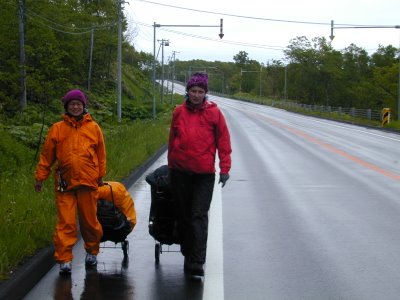
Our fifteen-kilogram backpacks proved to be far too heavy so after two weeks of trudging under their great weight, Etsuko and I invested in two luggage trolleys on wheels, which we pull behind us. We get truck drivers and construction workers gawking at us as they try to fathom out whether we're nouveau-riche bag ladies or what. We also get truck drivers running a regular route who now hoot their horns at us and wave. There have been days when we've turned up at the front door of a traditional Japanese inn looking like two drowned rats, having trudged through thunderstorms and lightning.Etsuko and I have also been terrified by some reckless drivers on Hokkaido's roads as we've made our way along narrow shoulders on some routes where trucks and cars hurtle along without a care for those on foot.

Bears have been another risk during our trek through Japan's most northern reaches. We have seen bear prints on the sides of the road, and I even spotted a The bear didn't notice me at first, but having heard various stories of how some bears are now used to the sound of tinkly bells and have even acquired a taste for human flesh, I did what came naturally to me once bear actually eyed me—I screamed and legged it as fast as I could.

Vicious buyo flies have ravaged my arms and legs, leaving itchy, pussy bites, and while Etsuko now has an enviable sun tan, I look like a boiled octopus with mentaiko (spicy cod roe) ears and an ume boshi (salty plum) nose.

We have argued about my roadside toilet indiscretions. "Why don't you pee further on down in that ditch, drivers can see you from here," Etsuko yelled at me out in the wilds of Otoineppu. "Because there may be snakes, and I also can't piddle with a load of nettles and weeds stuck up my bum," came my exasperated reply before I curled up with laughter at the thought that the sight of my lily-white, foreigner's backside might cause some truck driver to veer off the road.

Etsuko has tried to convince me that there are no snakes in Hokkaido, but after spotting one on a quiet lane on the outskirts of Abashiri she shrugged and tried to mollify me by saying, "It's dead, anyway. What are you panicking for?" We walked on for a few minutes before deciding to turn back and get a picture of the sleeping serpent, but it was no longer to be found.There have been occasions when we have wondered why on earth we ever decided to attempt such a walk, but the highlights of the journey and some of the characters we have met en route have turned each step into an adventure.

We have enjoyed stunning mountain and forest scenery and regularly spot hawks circling the skies. We are enamoured with sights that we could never see if just whizzing by in a car. Hokkaido has a myriad colourful, fluttering butterflies. Daily, we hear the sounds of woodpeckers, the delightful birdsong of little cuckoos and nightingales, and have caught glimpses of heron flying low along the rivers and lakes.


UNBEARABLE ROADS


PHOTOS BY
JAPAN ON FOOT 2001/2002

BEAR HUNTER Yoshio Kamigashima had come over to chat with us while Etsuko and I were sprawled out on the lawns of what is Japan's answer to the Great Wall of China. The village of Shimokawa completed its two-kilometre-long Mini Great Wall in 2000, in time for the new millennium and the hundredth anniversary of the town's settlement. It is a popular weekend hangout for locals in this part of Hokkaido.
Mr. Kamigashima, a spritely fifty-one-year-old with ruffled hair, asked us if we would like to see his hunting trophies, as well as his emu farm. We toddled over to his farmhouse to help feed the four Australian birds that make sounds like the revving-up of a motorcycle engine and lay eggs that are emerald green. Although Mr. Kamigashima considers the birds pets, he hopes eventually to sell their meat.

Inside his farmhouse, he pointed out the framed pelt of one of the forty or so grizzly brown bears that he has killed over the past twenty years. "I've actually killed the biggest brown bear recorded in Japan," Mr. Kamigashima told us, showing the bear-skin carpet that adorns his living room, as well as bear skulls and photographs of himself, rifle in hand, sitting on the bloodied corpse of what had once been a three-hundred-kilogram bear.
According to the bear hunter, official figures claim that there are up to three thousand bears in Hokkaido. Mr. Kamigashima, however, believes the bear population is much higher, so we keep on rigorously ringing our bear bells, hollering and singing as we traipse through densely forested areas.
As we reported last month, Etsuko and I spotted—and ran from—a brown bear on the road out of the village of Utsu. A couple of days later, over hot sake in the Ofukuro izakaya pub in Monbetsu, a fisherman chastised us. "The last thing you should ever do is show your back to a bear and run. They think you've given up and see you as bait," he explained.
Apart from bears, we face other hardships on the road. Due to the difficulties that we have faced sometimes in getting to a destination we have had to opt occasionally for a night in a bus shelter or sleep on the floor of a retired steam train. In 1957 the last steam train chugged out of the village of Kerochi, and in 1987 Kerochi Station closed its tracks for good. Today, for just three-hundred yen you can sleep on the train's floor. We spent a night on the old locomotive. Everything seemed novel and cosy at first until 3 a.m., when we awoke stiff from the cold.


QUEER HOKKAIDO FOLK


PHOTOS BY JAPAN ON FOOT 2001/2002

TRUCK DRIVERS, as well as the Self-Defence Force troops, have continued to show a spirit of roadside camaraderie as they pass us day in and day out along various Hokkaido routes. They toot their horns and wave. One right-wing trucker blasts out the Kimigayo, Japan's national anthem, and salutes us each time he hurtles past. We simply wish that he would think to slow down, but you meet all sorts on the road.
The builders, dressed in baggy, blue trousers and split-toe tabi, were chuckling over their shochu liquor as they spotted Etsuko and I entering the restaurant in our Teletubby rainwear.
"Where are you from?" the skinny one with a towel wrapped round his head asked me. "From England. London," I told him. "So what language do you speak there then?" he continued. I stifled a laugh and told him that we speak English in England. "Ooh," gasped his mate with the bleached blond hair, "You see, I told you. Everywhere these days people have to speak English."
If ignorance is bliss then I do believe that Hokkaido must have some of the happiest people in the world as I'm constantly amazed by the fact that few people seem to have heard of Britain or know what language its people speak. In Wakkanai, a waitress could not believe that Brits don't speak Russian, in Monbetsu a fisherman asked me if England was in Africa, and on hearing that my surname is King, a hotelier in Nakagawa inquired if I am related to Martin Luther King.
Etsuko, meanwhile, is often complimented on her Japanese speaking ability or has people accosting her for autographs when they hear she's from Okinawa and learn that her family name is Shimabukuro. "But you're really famous," gasped a young girl in a pub near Mashuko Lake, "You're a singer with the pop group Speed." Some people come out with real gems.
"Are you a man? You're far too tall to be a woman," the drunken trucker yelled at me across the restaurant). All 1.72 centimetres of me was tempted to reply that I'm a transsexual, but I simply answered, "Onna desu" (I'm a woman).
"What? The gaijin (foreigner) can speak Japanese," he screamed across at an elderly couple slurping their noodles by the window. "I've never heard a gaijin speak Japanese before. How can a gaijin speak Japanese? Is the other one a gaijin too?" His voice reached fever pitch as his excitement grew. "I keep passing them on the road; they've been walking for days," he informed the whole restaurant.
"Hey, gaijin, where are you walking to?" he continued. Etsuko turned round and informed him that we were on our way to Abashiri. "You can't walk to Abashiri; it's too far," he scoffed. "Actually, we've walked from Cape Soya and plan to walk to Okinawa," Etsuko continued. The trucker belched and looked at Etsuko agog: "Nihongo wa jozu desu (your Japanese is good)." "Thank you," she bowed her head, "I am Japanese."


BEAR ESSENTIALS


PHOTOS BY JAPAN ON FOOT 2001/2002


WE'RE BECOMING little experts on Hokkaido's most feared wild animal. Before setting off for Rausu, Akazawa Ayumi, who runs the Shiretoko Shizen Mura campground in Utoro, had filled us in on a few daunting facts.
First, that the Shiretoko Mountain Pass would lead us through one of Hokkaido's notorious "nests of the bear" as the area boasts at least one bear for every three square kilometres. Secondly, we learned that bear bells such as the ones we carry can have a Pavlovian effect.
The second piece of information came as a shock, especially when we came into contact with our second bear in less than three months in Hokkaido. This time, the bear was about seven metres away, walking parallel to us as we puffed up the deserted mountain road.
"Bears often follow trekkers to determine whether you pose a threat in their territory. If they believe you do, then they will attack," Akazawa told us.
A female with her cub, he warned us, is the most dangerous. "She will definitely strike." And, the problem with bear cubs, we learned, is that they like to play with humans; although what they consider play can be pretty rough stuff.
Bears in many parts of Hokkaido are blas? about the sound of traffic, are aware that where there are humans there's probably something tastier than a butterbur leaf on offer, and bells are a good indicator that trekkers are nearby.
"Many tourists, particularly photographers, come here, ringing their bells to feed the bears," Akazawa told us. "People want to get close-up bear shots but what they're doing is dangerous," he said.
I estimated that the bear following us would stand at least three meters high. We knew we didn't stand a chance against the beast. "Stand perfectly still and look the bear in the eye," a bear expert had recently advised on television. "Do not show your back and run. If the bear moves towards you, throw stones at it. If it's not then scared off, be ready to fight," the expert explained, concluding with the sobering fact that all those who have been killed by bears this year in Hokkaido put up a fight, lashing out with large knives or machetes. "I've never heard of anyone who has survived a fight with a bear," he said.
In Rausu, we discovered that bears like beer, the odd tipple of sake, and fruit juice. However, oolong-cha is not their cup of tea, according to Tomoko Kanomata, who runs the Kuma no Haitta Ie restaurant.
Some fifteen years ago, the Kanomata family was awoken in the night by a bear raiding the fridge. Inside the old wooden house, you can view smashed clocks, crockery and pierced drink cans from that fearful night. Photographs of the offending brown bear hang on the wall, and a huge iron cage takes pride of place in the lounge. "Just in case we need to trap another bear," Tomoko nervously giggled.


NONAKA NO CRY


ALL PHOTOS BY JAPAN ON FOOT 2001/2002


WE HAD schlepped for more than an hour off course in torrential rain to spend one night at Meakan Onsen. I was expecting a treat but I got more than I expected: foreigners are not welcome. Having been turned away from the two minshuku in the hot-spring area, Etsuko tried the Nonaka Onsen youth hostel. "Do you have a room for two?" she asked. "Who are you with?" asked the woman at the reception desk, looking first towards a Japanese man shuffling out of his shoes and then casting an eye my way. My heart sank into my boots as Etsuko pointed towards me and the woman replied "Chotto matte, kudasai (a moment, please)," poked her head around an office door to emerge a moment later and announce, "We're full."

It would be another thirty-kilometre schlep to the bus shelter out in no man's-land. A woman, who had spotted us on the road earlier that morning, came over to chat. On hearing our problem, Tsuda-san perked up: "You can share my room." Etsuko and I insisted that we would each pay the night's full rate for the room and so Tsuda-san asked the woman on the reception desk. "It's not possible," the receptionist snapped, "it's against our rules for you to share."
Etsuko bluntly asked the woman if the hostel had a "no-gaijin policy." She denied it but later that day, after we had traipsed past the "bus shelter" that turned out to be nothing more than a bus sign on the pavement, a local woman told us, "They don't let foreigners stay there. I don't know why."
We had no choice but to carry on to Ashoro, a town famed for Japan's biggest butterbur leaves and for being the childhood home of singer-songwriter Chiharu Matsuyama. We popped over to have a chat with the mother behind the man—Miyo Matsuyama, a sprightly eighty-year-old with short grey hair and glasses whose passions in life include mountain vegetable picking and chain-smoking.
A huge mural of Chiharu in his mop-haired seventies hey-day hangs outside the Matsuyama home. Today, forty-five-year-old Chiharu sports an egg-head look. Miyo-san's favourite memory of her son is as a junior high school pupil when he went door-to-door, selling natto (fermented soybeans). "That's how he got the money to buy his very first guitar," the old dear reminisced, "by selling natto to the people of Ashoro."
Rain was pelting down as we left Ashoro. Suddenly, a white jeep turned round on the road and hurtled back towards me. A youngish fellow with a completely shaved head peered over dark glasses and said something that I failed to catch. I assumed he was offering us a ride and politely I turned him down.
Etsuko caught sight of the Kojak look-alike as he pulled back out onto the road and gave a piercing shriek: "Don't you know who that was?" As I watched the jeep disappear over the brow of the hill, it dawned on me: "Bloody hell! I've just turned down a ride from Chiharu," I howled.


LEAVING HOKKAIDO ISLAND


PHOTOS BY
JAPAN ON FOOT 2001/2002

WE COULD still hear the chuckles of the construction workers as we left Kikonai behind and plodded on in the direction of Hakodate. It was the final day of our walk through Hokkaido, a trek that has covered almost two thousand kilometres. Honshu now lies ahead of us.
Assisting us with our luggage trolleys, a construction worker asked us where we were walking. The six workmen curled up with laughter on hearing that we were en route to Hakodate.
"It's about fifteen kilometres; you can't walk that far," a young chap giggled. "But we've walked from Cape Soya," I told him. There was stunned silence. "Well, you must be happy to finish your walk now," a middle-aged man piped up, wiping the sweat from his face with a dirty sleeve. "We walk Honshu next," Etsuko told them. "So where are you really walking to?" another chap tittered. I explained that our goal is Okinawa. The construction men creased up with mirth.
Our last few weeks in Hokkaido were some of the most exciting of our journey so far, with us, finally, coming face-to-face with bears at farms in Noboribetsu and at Showa Shinzan.
We also witnessed the aftermath of Usuzan's eruption of 2000 and talked to survivors of the tsunami that devastated Okushiri Island back in 1993.
But perhaps our most memorable day was at Mannenji temple in Manji village, northeast of Sapporo. There, we saw a doll that is believed to be possessed by the spirit of a dead little girl.

Crow black hair sweeps down past the thighs of the Okiku Ningyo that sits on the temple's altar yet, when she was bought 82 years ago, her hair is said to have been above chin length.
"She hasn't had her hair cut for ten years now," Junsho Imagawa , the monk told us. "But it continues to grow, although very slowly these days." Mr. Imagawa appeared afraid of the doll that was handed over to his father during World War II.
When Suzuki Kikuko passed away at the tender age of three her parents forgot to cremate her beloved doll with her. But, her elder brother, Eikichi, placed the doll on the family altar and played with it each day. "Eikichi started to notice that the hair was growing," Mr. Imagawa told us.
Just before the grown-up Eikichi was sent off to war in Sakhalin, he handed the doll over to Juno Imagawa at Mannenji temple. "When Eikichi returned to see the doll after the war, her hair had grown significantly longer," Mr. Imagawa continued.
I lay a bag of sweets on the golden altar as Etsuko lit some incense and offered a short prayer. In the flickering candlelight, the Okiku Ningyo's face took on a human, childlike quality and my heart skipped a beat as I looked into the doll's dark eyes. For a moment, I could have sworn she blinked.

ALL PHOTOS BY JAPAN ON FOOT 2001/2002


www.flickr.com


Mary King's photosMore of Mary King's photos